

Adrian Yanez vs Cristian Quinonez
Men's Bantamweight Bout • UFC Apex Bonfim vs Brown
Saturday, November 8, 2025

Explore Detailed Fighter Profiles
Click on either the fighter's name or profile image for each fighter to access comprehensive UFC statistics including striking metrics, grappling data, clinch performance, complete fight history, offensive & defensive analytics, and round-by-round breakdowns.
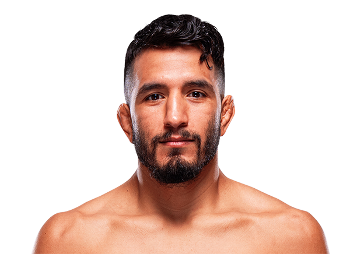
Fighter Metrics
Victory Methods
Win Round Distribution
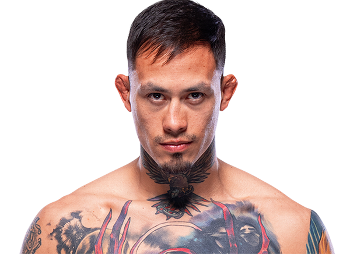
Fighter Metrics
Victory Methods
Win Round Distribution
Last 5 Fights - Adrian Yanez
| Date | Opponent | Result | Method |
|---|---|---|---|
| 2024-12-14 | Daniel Marcos | L | Decision - Split (R3, 5:00) |
| 2024-05-18 | Vinicius Salvador | W | TKO - Punches (GNP) (R1, 2:47) |
| 2023-10-14 | Jonathan Martinez | L | TKO - Leg Kicks (R2, 2:26) |
| 2023-04-08 | Rob Font | L | TKO - Punch (R1, 2:57) |
| 2022-06-18 | Tony Kelley | W | TKO - Punches (R1, 3:49) |
Last 5 Fights - Cristian Quinonez
| Date | Opponent | Result | Method |
|---|---|---|---|
| 2024-02-24 | Raoni Barcelos | L | Submission - Rear-Naked Choke (R3, 2:04) |
| 2023-06-17 | Kyung Ho Kang | L | Submission - Rear-Naked Choke (R1, 2:25) |
| 2022-09-03 | Khalid Taha | W | TKO - Punches (GNP) (R1, 3:15) |
| 2021-10-26 | Long Xiao | W | Decision - Unanimous (R3, 5:00) |
| 2021-02-26 | Donny Matos | W | Decision - Unanimous (R3, 5:00) |
Technical Analysis
Technical Score
Cardio Score
Overall Rating
📊 Technical Score
Calculated as the average of Striking Composite (72 vs 51) and Grappling Composite (38 vs 59). Reflects the blend of striking efficiency and wrestling/submission profile.
💪 Cardio Score
Based on average fight duration, striking rate per minute, takedown rate, and finish rate. Measures cardiovascular endurance and ability to maintain pace throughout fights.
🎯 Overall Rating
Simple average of Technical Score and Cardio Score. Provides a holistic view of fighter capabilities combining skill level with physical conditioning and fight performance.
Striking Composite
Grappling Composite
🥊 Striking Composite
Weighted combination of Significant Strikes per Minute (SLpM), Striking Accuracy (StrAcc), Striking Defense (StrDef), and Strikes Absorbed per Minute. Measures overall striking effectiveness including offensive output, precision, and defensive ability.
🤼 Grappling Composite
Calculated from Takedowns per 15min (TD15), Takedown Accuracy (TDAcc), Takedown Defense (TDDef), and Submission Attempts per 15min (SubPer15). Evaluates complete grappling game including takedown ability, defensive wrestling, and submission threat.
Technical Radar Comparison
Metrics Legend
Detailed Statistical Comparison
🥊 Fight Analysis Breakdown
🏆 Adrian Yanez Key Advantages
Yanez operates at a blistering 6.23 SLpM pace, nearly 49% higher output than Quinonez's 4.19 SLpM. In the compressed 25ft UFC Apex cage, his pressure boxing becomes exponentially more effective. His hand speed and shot selection are optimized for pocket exchanges, where he can unleash his signature 1-2 combinations and body-head transitions. The small cage eliminates Quinonez's ability to reset and circle away, forcing him into the exact range where Yanez's boxing mechanics shine. His 42% striking accuracy holds steady even against elite competition like Rob Font, demonstrating his ability to maintain precision under pressure.
Yanez's 82% takedown defense creates a crucial barrier against Quinonez's wrestling attempts. His defensive fundamentals include proper hip positioning, underhook control, and quick circling to prevent single-leg entries. Against Salvador, he stuffed 100% of takedown attempts while maintaining his striking rhythm. This first-layer defense is critical because Quinonez's path to victory requires getting the fight to the ground. Yanez's ability to sprawl and immediately return to boxing range allows him to dictate the fight's location, forcing Quinonez into the standup exchanges where he holds the clear advantage.
Yanez's finishing profile shows a 60% R1 knockout rate, reflecting his ability to read opponents quickly and capitalize on early opportunities. His 6:48 average fight duration demonstrates his preference for explosive, early finishes rather than prolonged wars. The small cage amplifies this threat by reducing Quinonez's ability to survive the early storm through movement and distance management. Yanez's power is validated by his ability to hurt opponents with single shots, as seen in his TKO victories over Kelley and Salvador. His fast reads and shot selection allow him to find openings in the pocket, making him particularly dangerous in the opening exchanges.
⚠️ Unfavorable Scenarios
Yanez's forward pressure style makes him susceptible to sustained calf-kick attacks, as evidenced by his TKO loss to Martinez. When opponents can establish a rhythm with low kicks, it compromises his ability to close distance and maintain his preferred boxing range. Quinonez could potentially use this strategy to slow Yanez's entries and create opportunities for takedown attempts. The key is whether Quinonez can withstand Yanez's early pressure long enough to establish this kicking game, which is far from guaranteed given Yanez's quick starts and power.
Extended clinch-wrestling sequences neutralize Yanez's primary advantages of pace and striking volume. If Quinonez can chain takedown attempts and keep Yanez pressed against the cage, it eliminates the space needed for Yanez's boxing combinations. This scenario becomes more likely if Quinonez can survive the early exchanges and establish his grappling rhythm. However, Yanez's 82% takedown defense suggests he can typically prevent these situations from developing, and his ability to circle off the fence and reset to boxing range is crucial to his success.
📋 Likely Gameplan
Yanez will look to establish his rhythm immediately with high-volume combinations, using jab feints to draw reactions before unleashing his power right hand. His body-head transitions will be crucial to breaking down Quinonez's defense and setting up finishing sequences. Expect him to pressure forward from the opening bell, cutting off the cage and forcing exchanges in the pocket where his superior boxing mechanics and hand speed can take over. His footwork will be designed to prevent Quinonez from establishing range for kicks or setting up takedown entries.
Yanez's defensive strategy will focus on maintaining proper hip positioning to prevent takedown entries, using underhooks to control Quinonez's posture and disrupt his shot timing. When Quinonez attempts takedowns, Yanez will sprawl hard and immediately circle back to the center of the cage, avoiding prolonged clinch battles. His quick resets will be essential to maintaining his striking rhythm and preventing Quinonez from establishing the grappling exchanges he needs to win. The goal is to make every takedown attempt costly for Quinonez by making him pay with strikes during the transition.
🚀 Cristian Quinonez Key Advantages
Quinonez's wrestling initiative at 1.37 TD/15 represents his primary path to victory against Yanez's superior striking. His 38% takedown accuracy, while not elite, provides enough threat to keep Yanez honest and potentially create opportunities for ground control. The small cage actually benefits Quinonez's wrestling by reducing the space Yanez has to circle away from takedown attempts. Quinonez's ability to chain takedown attempts and transition to back control could neutralize Yanez's boxing advantages. However, his recent UFC performances show vulnerability to submission defense, which could be exploited if he fails to maintain dominant positions.
Quinonez's 84% takedown defense provides a solid foundation for withstanding Yanez's pressure, while his comparable striking defense (55% vs Yanez's 55%) suggests he can survive the initial exchanges if he can maintain distance. His defensive metrics indicate he's not easily overwhelmed by volume strikers, which is crucial against Yanez's high-paced approach. However, the key question is whether his defensive skills can hold up under Yanez's sustained pressure over multiple rounds. His recent losses suggest defensive vulnerabilities, particularly in submission scenarios, which could be problematic if the fight goes to the ground in unfavorable positions.
Quinonez's +2" leg reach advantage provides him with the tools to potentially establish a kicking game and create openings for takedown attempts. His slight height advantage (5'8" vs 5'7") allows him to work from a slightly longer range, potentially avoiding Yanez's pocket combinations. The leg reach advantage is particularly valuable for setting up level changes and creating the misdirection needed to land takedowns. However, in the small cage, these advantages are significantly diminished, and Yanez's pressure style is designed to nullify such reach advantages by forcing opponents into close-range exchanges where his superior boxing mechanics can take over.
⚠️ Unfavorable Scenarios
Quinonez's 4.19 SLpM output creates a significant 49% deficit against Yanez's high-volume approach, which becomes increasingly problematic in the small cage environment. When forced into sustained striking exchanges, Quinonez's lower output allows Yanez to control the pace and accumulate damage over time. This output gap becomes particularly dangerous in the later rounds when Yanez's pressure and volume can overwhelm Quinonez's defensive capabilities. The cumulative effect of this pace differential means that even if Quinonez survives the early rounds, he's likely to lose the decision due to insufficient activity and control time in the judges' eyes.
Quinonez's recent UFC performances reveal critical vulnerabilities in his submission defense, with back-to-back rear-naked choke losses to Barcelos and Kang. These losses expose fundamental weaknesses in his scrambling ability and defensive positioning when his back is taken. Against Yanez, this becomes particularly problematic because while Yanez isn't known for submissions, if Quinonez fails to establish dominant grappling positions and ends up in inferior spots, his defensive liabilities could be exploited. The pattern of quick submission losses (R1 and R3) suggests he may panic or make technical errors when under pressure, which could be triggered by Yanez's aggressive striking forcing him into desperate takedown attempts.
📋 Likely Gameplan
Quinonez's primary strategy will focus on using his +2" leg reach advantage to establish a calf-kick game that can slow Yanez's forward pressure and create opportunities for takedown entries. By targeting Yanez's lead leg with consistent low kicks, Quinonez can disrupt Yanez's boxing rhythm and force him to adjust his stance, which creates openings for level changes and takedown attempts. The key is to use these kicks to draw Yanez's attention downward, then quickly change levels and shoot for single or double-leg takedowns. Once successful, Quinonez will look to maintain top control against the fence, using his wrestling background to prevent Yanez from scrambling back to his feet.
When his initial takedown attempts are stuffed by Yanez's 82% takedown defense, Quinonez must immediately transition to chain wrestling sequences rather than accepting the failed shot and returning to striking exchanges. This means quickly transitioning to back takes, mat returns, or switching to different takedown techniques like trips or clinch-based takedowns. The small cage actually benefits this approach by limiting Yanez's ability to circle away from follow-up attempts. Quinonez's 38% takedown accuracy suggests he needs multiple attempts to succeed, so he must be prepared to chain these attempts together. Most importantly, he must avoid extended pocket exchanges where Yanez's superior boxing and 49% volume advantage will quickly accumulate damage and control time.
🎯 Fight Prediction Analysis
Data-driven prediction model based on statistical analysis
📊Detailed Analysis Summary
🏟️Cage Dynamics
The 25ft UFC Apex cage fundamentally alters the dynamics of this matchup by compressing distance and eliminating the space typically available for movement and reset strategies. This environment exponentially amplifies Adrian Yanez's pressure boxing approach, forcing opponents into the exact range where his hand speed and combination work thrive. For Cristian Quinonez, the small cage severely limits his ability to use lateral movement to avoid takedown attempts or reset after failed shots. The reduced canvas means every exchange happens in Yanez's preferred pocket range, while Quinonez's traditional strategies of using space to set up entries become significantly more difficult to execute. The cage essentially creates a pressure cooker environment that favors the fighter with superior close-quarters skills and defensive fundamentals.
🎯Technical Breakdown
Adrian Yanez dominates the striking metrics with a commanding 72 vs 51 composite advantage, driven primarily by his exceptional 6.23 SLpM output compared to Cristian Quinonez's 4.19 SLpM. This 49% volume advantage becomes even more significant in the small cage environment. Yanez's 42% striking accuracy, maintained even against elite competition, demonstrates his ability to land clean shots under pressure. Quinonez's path to competitiveness lies in his wrestling game, attempting 1.37 takedowns per 15 minutes at 38% accuracy, though his recent UFC performances suggest this accuracy may be overstated against higher-level competition. His 84% takedown defense provides a solid foundation, but the question remains whether he can survive Yanez's early pressure long enough to establish his grappling rhythm.
🧩Key Battle Areas
The fight's outcome hinges on three critical battle areas: early reads and pace establishment, calf-kick mitigation strategies, and first-layer takedown defense effectiveness. Yanez's ability to establish his high-volume rhythm from the opening bell will determine whether Quinonez can survive the early storm and implement his grappling game plan. Quinonez's most viable path to victory requires successfully chaining takedown attempts into dominant positions, particularly back control where he can threaten submissions or maintain control time. However, if Yanez can consistently stuff initial takedown attempts and reset to boxing range, his superior pace and combination work will dominate the pocket exchanges. The small cage environment makes defensive wrestling even more critical, as failed takedown attempts leave Quinonez exposed to Yanez's counter-striking and pressure combinations.
🏁Final Prediction
The fight's trajectory clearly favors Adrian Yanez in terms of sustained output and control time, while Cristian Quinonez needs specific scenarios involving prolonged ground control to swing the momentum. Over three rounds in the small cage environment, Yanez's superior striking volume, accuracy, and pace create a cumulative advantage that becomes increasingly difficult for Quinonez to overcome. Quinonez's path to victory requires either early takedown success leading to dominant positions, or the ability to survive Yanez's early pressure and implement a leg-kick strategy to slow the pace. However, Yanez's 82% takedown defense and pressure boxing style make these scenarios increasingly unlikely as the fight progresses. The small cage amplifies Yanez's advantages while minimizing Quinonez's traditional strategies. Projection: Adrian Yanez by KO/TKO in the first two rounds, or Decision if Quinonez can survive the early pressure and make it competitive in the later rounds.
💰 Betting Analysis: Model vs Market
Detailed value assessment in the betting market
📊Market Odds
Market Props
🤖Analytical Model
Model Props
💎Value Opportunities
GOOD VALUE
Model: 40%
FAIR VALUE
Model: 28%
SLIGHT VALUE
Model: 55%
⚠️Key Market Discrepancies
- • Pace differential undervalued – Books may underprice Adrian Yanez's SLpM edge.
- • Small cage impact – Reduced space favors pocket exchanges not fully priced in.
- • Submission risk overstated – Adrian Yanez rarely grapples offensively.
🎯 Comprehensive Probabilistic Analysis
100 hypothetical fight simulation based on statistical data
🏆Outcome Distribution - Adrian Yanez
Primary finishing method
Minute winning with volume
Unlikely submission path
💥Outcome Distribution - Cristian Quinonez
Early counter lanes
Control via clinch & fence work
Opportunistic back-takes
⏰Fight Timeline Analysis
⚡Window of Opportunity - Cristian Quinonez
- • Early counters: Best KO equity before reads settle.
- • Clinch-to-ride: Use fence to create mat returns and back control.
- • Kick layer: Calf kicks to slow the pocket pressure.
🎯Progressive Dominance - Adrian Yanez
- • Minute winning: Jab, cross, and body-head transitions rack up points.
- • Defense first: Exit clean after combinations to deny counters.
- • Sprawl insurance: Strong first-layer TDD maintains range control.
🎯 Final Confidence Assessment
Conviction level: 7/10 — Volume and small-cage dynamics with control risk
Confidence Level
Solid edge for Adrian Yanez with wrestling volatility from Cristian Quinonez.
✅Supporting Factors
- • Higher SLpM with comparable accuracy
- • Small-cage pressure amplifies boxing advantage
- • Reliable first-layer takedown defense
- • Proven finishing danger early
⚠️Risk Factors
- • Chain wrestling and fence rides from Cristian Quinonez
- • Calf-kick disruption of forward pressure
- • Bantamweight volatility in exchanges
🏁Executive Summary
Adrian Yanez holds the sustainable minute-winning profile and better small-cage translation, while Cristian Quinonezcarries control-based variance. Model leans 68–32 toward Adrian Yanez, with KO/TKO and decision as primary routes.
Prediction: Adrian Yanez by KO/TKO or Decision. Live hedge: Cristian Quinonez by Decision in extended clinch scenarios.