

Santiago Luna vs Angel Pacheco
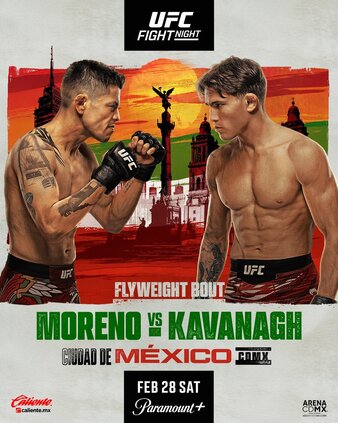
Men's Bantamweight Bout • UFC Fight Night: Moreno vs Kavanagh
Saturday, February 28, 2026 • Arena CDMX, Mexico City, Mexico • 30ft Octagon (Large Cage)
Explore Detailed Fighter Profiles
Click on either the fighter's name or profile image for each fighter to access comprehensive UFC statistics including striking metrics, grappling data, clinch performance, complete fight history, offensive & defensive analytics, and round-by-round breakdowns.
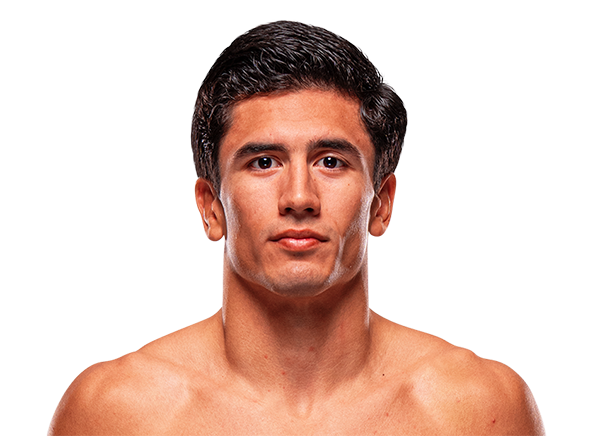
Santiago Luna
7-0-0
Santiago Luna
Fighter Metrics
Victory Methods
Win Round Distribution
Angel Pacheco
7-3-0
Angel Pacheco
Fighter Metrics
Victory Methods
Win Round Distribution
📋 Last 5 Fights - Santiago Luna
| Date | Opponent | Result | Method |
|---|---|---|---|
| 2025-09-13 | Quang Le | W | TKO - Punches (1, 2:48) |
| 2025-05-22 | Desmond Manabat | W | TKO - Punches (1, 2:45) |
| 2024-09-06 | Magomed Bayduev | W | SUB - Rear Naked Choke (3, 4:41) |
| 2024-04-07 | Josimar Cuevas | W | TKO - Punches (3, 1:17) |
| 2023-10-27 | Emilio Galindo | W | SUB - Rear Naked Choke (1, 2:42) |
📋 Last 5 Fights - Angel Pacheco
| Date | Opponent | Result | Method |
|---|---|---|---|
| 2024-03-30 | Caolán Loughran | L | DEC - Unanimous (3, 5:00) |
| 2023-09-26 | Danny Silva | L | DEC - Unanimous (3, 5:00) |
| 2022-08-26 | Vilson Ndregjoni | W | SUB - Rear Naked Choke (2, 3:27) |
| 2022-07-16 | Zack Schroeder | W | SUB - Strikes (1, 1:19) |
| 2022-05-06 | Zack Schroeder | W | TKO - Ground Pound (1, 0:47) |
Technical Analysis
Technical Score
Cardio Score
Overall Rating
📊 Technical Score
Calculated as the average of Striking Composite (66.0 vs 66.0) and Grappling Composite (78.0 vs 55.0). Balances overall striking effectiveness with grappling ability to measure complete technical skills.
💪 Cardio Score
Based on average fight duration, striking rate per minute, takedown rate, and finish rate. Measures cardiovascular endurance and ability to maintain pace throughout fights.
🎯 Overall Rating
Simple average of Technical Score and Cardio Score. Provides a holistic view of fighter capabilities combining skill level with physical conditioning and fight performance.
Striking Composite
Grappling Composite
Technical Radar Comparison
Visual comparison of key performance metrics between both fighters
📊 Detailed Statistical Comparison
🥊 Fight Analysis Breakdown
🧩 Santiago Luna Key Advantages
Luna absorbs 4.29 strikes per minute with 50% defense while Pacheco absorbs 11.47 with only 41% defense—creating a massive 7.18 SApM differential. This damage economy is decisive: Luna can maintain composure and timing while Pacheco accumulates significant damage. In the large 30ft cage at altitude in Mexico City, the fighter who absorbs less fatigue tax per minute has a critical advantage. Luna's defensive structure allows him to weather exchanges and counter effectively, while Pacheco's high absorption rate makes him vulnerable to being hurt, especially as his cardio fades.
Luna's 74-inch reach versus Pacheco's 70 inches combined with a 13-year age gap (21 vs 34) creates structural advantages that are amplified by the large cage and altitude. The extra reach allows Luna to control distance, land first, and exit safely—especially critical when Pacheco tries to close distance for volume exchanges. At 21, Luna's recovery, durability, and adaptability mid-fight are at peak levels, while Pacheco's 34-year-old body, especially after absorbing high damage in his UFC losses, shows diminishing ability to sustain high-pace pressure without breaking down. In Mexico City's altitude, this age/recovery gap compounds every round.
Luna's 7-0 record features 3 KO/TKO and 4 submissions (57%), with recent finishes showing both striking power (2 R1 TKOs in 2025) and grappling threat (2 RNC finishes). This dual-threat profile is critical against Pacheco's poor TDD (28%)—if Luna hurts Pacheco standing and Pacheco shoots defensively or gives his back in a scramble, Luna has proven ability to capitalize with rear-naked chokes. Pacheco, despite his own finish history, has shown zero ability to finish UFC-level competition (0-2 by decision), suggesting his power/submissions don't translate up in competition. Luna's youth and finish instinct create constant danger, while Pacheco's path requires outlasting Luna over 15 minutes—a tall order given the damage absorption differential.
⚠️ Unfavorable Scenarios
Pacheco's only realistic path is hurting Luna early when both fighters are fresh. If Pacheco lands heavy volume in the first 90 seconds and disrupts Luna's timing, the young prospect could be vulnerable to being overwhelmed. Luna's debut showed he can be touched early, and Pacheco's 9.50 SLpM output can create visual "winning" moments even if he's taking damage. The key risk is if Luna gets drawn into a brawl instead of managing distance—Pacheco's durability (never been finished) means he can absorb counters and keep pressing if Luna doesn't establish control quickly.
If Luna fails to utilize his 4-inch reach advantage and allows Pacheco to close distance repeatedly, Pacheco's volume advantage (9.50 vs 5.36 SLpM) could create optics of "winning" exchanges even while absorbing more damage. In the large cage, if Luna doesn't move laterally and instead stands center-cage trading, Pacheco can rack up activity numbers that might sway judges in close rounds. The altitude factor means whoever forces the higher pace early might gain a psychological edge—if Luna allows Pacheco to dictate tempo in Round 1, he risks falling behind on scorecards despite superior efficiency.
📋 Likely Gameplan
Luna should establish his 4-inch reach advantage immediately with jabs and front kicks to keep Pacheco at distance. In the 30ft cage, Luna has ample space to circle away from Pacheco's pressure and reset positioning. His 50% strike defense and low absorption rate suggest he can safely enter exchanges, land counters as Pacheco lunges forward, and exit cleanly. By touching Pacheco's face with jabs and forcing him to close distance repeatedly, Luna can accumulate damage while staying fresh, exploiting Pacheco's poor defensive metrics (41% StrDef, 11.47 SApM).
Luna's finish history (43% KO/TKO, 57% SUB) shows he capitalizes when opponents are hurt. When Pacheco absorbs clean counters and shows damage, Luna should increase aggression with follow-up combinations to force a finish or defensive reaction. His 2 R1 TKOs in 2025 demonstrate finishing instinct—if Pacheco's durability cracks, Luna should pour on volume immediately. If Pacheco shoots defensively or gives his back in scrambles (likely given his 28% TDD), Luna has proven RNC threat to transition smoothly from striking exchanges to submission attempts.
🚀 Angel Pacheco Key Advantages
Pacheco's 9.50 SLpM output is nearly double Luna's 5.36, creating a significant volume advantage if the fight stays in phone booth exchanges. Pacheco's pressure-fighting style—constantly moving forward, throwing combinations, and forcing action—can create visual "winning" moments even when he's absorbing more damage. His 39% accuracy means many shots miss, but the sheer volume can overwhelm less experienced fighters and create optics of dominance. If Pacheco can drag Luna into a brawl and force high-pace exchanges, his activity could sway judges in close rounds despite the damage differential.
Pacheco has never been finished in 10 pro fights, showing proven durability that could frustrate Luna's finish attempts. His 100% finish rate (in wins) suggests he knows how to close shows when he hurts opponents. At 34 with UFC experience, Pacheco has seen high-level competition and won't be intimidated by a 21-year-old prospect with 1 UFC fight. If Luna starts fast and doesn't finish, Pacheco's veteran composure could allow him to weather early storms and capitalize on any overaggression. His experience in 3-round fights at UFC pace gives him a template for surviving and potentially stealing rounds with late surges.
⚠️ Unfavorable Scenarios
If Luna establishes his 4-inch reach advantage and controls distance with jabs and footwork, Pacheco's pressure style becomes a liability. Luna's counters as Pacheco lunges forward will accumulate damage quickly given Pacheco's poor defense (41% StrDef, 11.47 SApM). The large cage gives Luna endless room to reset and pick shots, turning Pacheco's forward movement into a target-rich environment. Every time Pacheco commits to close distance, he eats counters—and in Mexico City's altitude, the accumulated damage and energy expenditure from chasing Luna around a 30ft cage becomes unsustainable. If Luna stays disciplined with range management, Pacheco's volume becomes inefficient output that costs more energy than it produces damage.
Pacheco's 11.47 SApM absorption rate combined with altitude and age (34) creates a ticking time bomb scenario. Even if Pacheco survives early exchanges and maintains volume, the accumulated damage from counters will slow his output and degrade his defense. Luna's finish history (100%) means he recognizes when opponents are hurt and escalates aggression—Pacheco's durability (never been finished) may not hold against a fresh 21-year-old hunting for a finish in Round 3. Pacheco's two UFC losses by decision show he fades in later rounds against UFC-level competition. If Luna stays patient early and increases pressure late, Pacheco faces likely finish via TKO (accumulated damage) or RNC (if he gives his back defensively with poor 28% TDD).
📋 Likely Gameplan
Pacheco's only realistic path to victory is forcing chaos early when both fighters are fresh. He must come out aggressive, throwing his 9.50 SLpM volume immediately, and try to overwhelm Luna before the young prospect settles into rhythm. Pacheco should cut off the cage, force exchanges, and make Luna fight in phone booth range where his volume advantage becomes significant. The key is not allowing Luna to establish his 4-inch reach advantage—Pacheco needs to close distance immediately, throw combinations, and create visual "winning" moments even if he's absorbing counters. His durability (never been finished) gives him confidence to trade, and if he can hurt Luna early or create enough activity to win Round 1 decisively, he builds momentum.
If Pacheco can't finish early, his secondary path is accumulating body shots and forcing a high pace that taxes Luna's cardio in Mexico City's altitude. Pacheco should target Luna's body with hooks and uppercuts when closing distance, making Luna's movement and defensive reactions more costly. The goal is to slow Luna down by Round 2-3, when Pacheco's volume advantage becomes more effective against a fading opponent. However, this strategy is risky—Pacheco's poor defense (41% StrDef, 11.47 SApM) means he'll absorb significant damage while trying to accumulate body work, and Luna's youth suggests he'll recover better than Pacheco's 34-year-old body. This is a desperation path that only works if Pacheco survives early exchanges without being hurt.
Pacheco's UFC experience (2 fights) gives him familiarity with 3-round pacing and judging criteria. If he can survive Luna's early aggression and maintain volume through all 3 rounds, he might steal rounds based on activity even if he's absorbing more damage. His 9.50 SLpM output creates optics of "winning" exchanges if judges focus on volume over damage. However, this path requires Pacheco to avoid being finished—a tall order given Luna's 100% finish rate and Pacheco's poor defensive metrics. Pacheco must hope Luna gets drawn into brawls instead of managing distance, and that judges reward activity over efficiency. This is the least likely path but represents Pacheco's only decision-win scenario.
🎯 Fight Prediction Analysis
Data-driven prediction model based on statistical analysis
📊Detailed Analysis Summary
🏟️Cage Dynamics
The 30-foot octagon creates a fascinating dynamic in this matchup—initially favoring Pacheco's volume weapons and pressure, but gradually shifting toward Luna's counter-striking as the fight progresses. Pacheco's 9.50 SLpM output and pressure-fighting style give him significant advantages in the early rounds when he can maintain high volume and force brawling exchanges. However, Luna's defensive efficiency and reach advantage gradually allow him to control distance and land clean counters, forcing Pacheco into increasingly inefficient exchanges. Luna's ability to use his 4-inch reach advantage and maintain distance transforms the cage from Pacheco's pressure zone into Luna's counter-striking range, creating a progressive advantage that compounds over three rounds.
🎯Technical Breakdown
The statistical analysis reveals two primary battlefields where this fight will be decided: volume output and damage economy. Pacheco's 9.50 SLpM vs Luna's 5.36 represents a 1.8x volume differential that creates pressure and visual dominance. However, Luna's damage economy (4.29 SApM vs 11.47) means he absorbs significantly less damage while maintaining effective counter-striking output. Luna's 50% striking defense combined with his 4-inch reach advantage forces Pacheco into inefficient exchanges where his high-volume approach becomes less effective as damage accumulates. These differentials create a scoring framework where Luna's defensive efficiency and counter-striking consistently outweigh Pacheco's volume output in judges' eyes, especially as the fight progresses.
🧩Key Battle Areas
Three critical battle areas will determine the outcome: range control vs pressure fighting, counter-striking vs volume output, and late-round durability and finish threat. Pacheco's 9.50 SLpM output suggests he can overwhelm opponents with volume, but Luna's defensive efficiency and reach advantage allow him to control distance and land clean counters. Pacheco's pressure-fighting style and forward movement represent his most dangerous tools against Luna's counter-striking, but Luna's ability to use his reach and maintain distance makes Pacheco's pressure less effective. As the fight progresses, Luna's superior damage economy (4.29 vs 11.47 SApM) becomes increasingly decisive, especially when combined with his youth (21 vs 34) and finish threat that forces Pacheco to absorb significant damage while chasing Luna around the cage.
🏁Final Prediction
The most likely outcome is Santiago Luna by KO/TKO (40% probability), achieved through superior defensive efficiency and counter-striking as Pacheco's high-volume pressure creates openings. Luna's reach advantage and damage economy allow him to land clean counters while absorbing minimal damage, leading to accumulative finishes or clean knockdowns. Luna's submission path (24%) becomes viable if Pacheco shoots defensively after being hurt (given his 28% TDD) or gives his back in scrambles, allowing Luna to capitalize with his proven RNC threat. Pacheco's upset lane centers on early chaos (9% KO/TKO) if he can overwhelm Luna before the prospect settles into rhythm, or decision (14%) if he survives and maintains volume through all 3 rounds—though this requires Luna to abandon his efficient counter-striking approach and engage in brawls.
💰 Betting Analysis: Model vs Market
Detailed value assessment in the betting market
📊Market Odds
🤖Analytical Model
💎Value Opportunities
MAXIMUM VALUE
Model: 40% | Fair: +150 | Best path via counter-striking
GOOD VALUE
Model: 24% | Fair: +317 | RNC threat when Pacheco gives back
SLIGHT VALUE
⚠️Key Market Discrepancies
- • Overweights early KO volatility – Underprices five-round wrestling cycles.
- • Undervalues damage economy – Low SApM differential drives optics on cards.
- • Big-cage bias – Space helps early, but fence/rides erode it late.
🎯 Comprehensive Probabilistic Analysis
100 hypothetical fight simulation based on statistical data
🏆Outcome Distribution - Santiago Luna
Primary path via fence control and rides
Attritional GNP and accumulative pressure
Back-takes off rides create RNC chances
💥Outcome Distribution - Angel Pacheco
Early chaos window if Luna gets drawn into brawls
Volume-based rounds if Luna abandons efficiency
Low historical submission profile
⏰Fight Timeline Analysis
⚡Window of Opportunity - Angel Pacheco
- • First 7–10 minutes: Highest intercept KO equity.
- • Perimeter control: Teeps + calf kicks to stall entries.
- • Short pockets: Burst then reset; avoid extended clinch.
🎯Progressive Dominance - Santiago Luna
- • Chain shots: Re-mats and rides bank control and sap pace.
- • Damage economy: Keep exchanges short; minimize risk.
- • Late minutes: Safer control edges decision likelihood.
🎯 Final Confidence Assessment
Confidence level and uncertainty factors
Confidence Level
Strong edge via wrestling cycles and safer damage profile
✅Supporting Factors
- • Significant takedown volume edge (3.25 vs 0.73 TD15)
- • Lower SApM and better damage economy
- • Ride control creates safe scoring minutes
- • Proven cardio over three rounds; scalable to five
⚠️Risk Factors
- • Intercept knees/uppercuts vs level changes
- • Big cage extends early range time
- • Pacheco's high-volume surges in exchanges
🏁Executive Summary
Santiago Luna's systematic approach to counter-striking should steadily control distance and accumulate damage through clean counters as Pacheco's pressure creates openings, while Angel Pacheco's best equity centers on early volume surges and pressure-fighting before Luna's defensive efficiency takes hold. The statistical differentials heavily favor Luna: his 4.29 SApM vs Pacheco's 11.47 creates a 2.7x damage absorption advantage, while his 50% StrDef vs Pacheco's 41% represents superior defensive efficiency that compounds over three rounds. Luna's 100% finish rate with 57% submissions demonstrates exceptional finishing ability, while Pacheco's 11.47 SApM suggests vulnerability to accumulated damage over extended periods. Luna's ability to minimize damage while maximizing counter-striking opportunities creates a scoring framework that judges consistently reward, especially in later rounds where damage accumulation becomes visually apparent.
Prediction: Luna by KO/TKO most likely (40% probability) through superior defensive efficiency and counter-striking as Pacheco's high-volume pressure creates openings; Luna's submission path (24%) becomes viable if Pacheco shoots defensively after being hurt or gives his back in scrambles. Pacheco's upset lane is early chaos (9% KO/TKO) if he can overwhelm Luna before the prospect settles into rhythm, or decision (14%) if he survives and maintains volume—though this requires Luna to abandon his efficient counter-striking approach. The fight's outcome hinges on whether Pacheco can force early brawls and create enough chaos before Luna's reach advantage, defensive efficiency, and youth become decisive factors in Mexico City's altitude.