

Daniel Zellhuber vs King Green
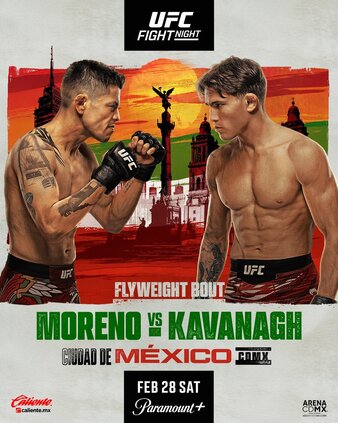
Men's Lightweight Bout • UFC Fight Night: Moreno vs Kavanagh
Saturday, February 28, 2026 • 30ft Octagon (Large Cage) • Mexico City, Arena CDMX
Explore Detailed Fighter Profiles
Click on either the fighter's name or profile image for each fighter to access comprehensive UFC statistics including striking metrics, grappling data, clinch performance, complete fight history, offensive & defensive analytics, and round-by-round breakdowns.
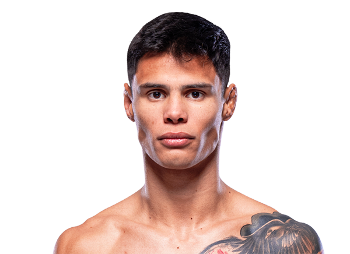
Daniel Zellhuber
Fighter Metrics
Victory Methods
Win Round Distribution
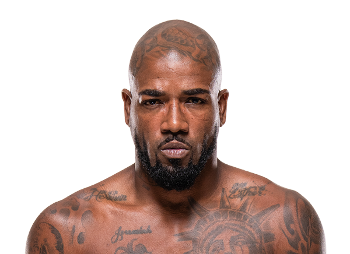
King Green
33-17-1
King Green
Fighter Metrics
Victory Methods
Win Round Distribution
📋 Last 5 Fights - Daniel Zellhuber
| Date | Opponent | Result | Method |
|---|---|---|---|
| 2025-07-19 | Michael Johnson | L | DEC (3, 5:00) |
| 2024-09-14 | Esteban Ribovics | L | DEC (3, 5:00) |
| 2024-02-24 | Francisco Prado | W | DEC (3, 5:00) |
| 2023-09-16 | Christos Giagos | W | SUB (2, 3:26) |
| 2023-04-15 | Lando Vannata | W | DEC (3, 5:00) |
📋 Last 5 Fights - King Green
| Date | Opponent | Result | Method |
|---|---|---|---|
| 2025-12-13 | Lance Gibson Jr. | W | DEC (3, 5:00) |
| 2025-03-08 | Mauricio Ruffy | L | TKO - Heel Kick (1, 2:07) |
| 2024-07-27 | Paddy Pimblett | L | SUB - Triangle Ch. (1, 3:22) |
| 2024-04-13 | Jim Miller | W | DEC - Unanimous (3, 5:00) |
| 2023-12-02 | Jalin Turner | L | TKO - Punches (1, 2:49) |
Technical Analysis
Technical Score
Cardio Score
Overall Rating
📊 Technical Score
Calculated as the average of Striking Composite (66.0 vs 66.0) and Grappling Composite (78.0 vs 55.0). Balances overall striking effectiveness with grappling ability to measure complete technical skills.
💪 Cardio Score
Based on average fight duration, striking rate per minute, takedown rate, and finish rate. Measures cardiovascular endurance and ability to maintain pace throughout fights.
🎯 Overall Rating
Simple average of Technical Score and Cardio Score. Provides a holistic view of fighter capabilities combining skill level with physical conditioning and fight performance.
Striking Composite
Grappling Composite
Technical Radar Comparison
Visual comparison of key performance metrics between both fighters
📊 Detailed Statistical Comparison
🥊 Fight Analysis Breakdown
🧩 Daniel Zellhuber Key Advantages
Zellhuber's 77-inch reach advantage over Green's 71 inches, combined with 3 inches in height (73" vs 70"), creates natural range dominance amplified by the large 30-foot cage. The Mexican fighter's ability to layer jabs, teeps, and long front kicks gives him runway to establish distance control. In Mexico City's altitude, this space becomes even more valuable—Green must close distance repeatedly, burning energy in thin air. Zellhuber's 90% standing strike percentage shows he's comfortable keeping this at range, and his length allows him to touch first while staying outside Green's counter pocket.
Despite the accuracy deficit (41% vs 53%), Zellhuber carries legitimate knockout power with 0.36 knockdowns per 15 minutes compared to Green's 0.29. His 47% KO/TKO win rate (7 of 15 wins) demonstrates real finishing ability when he finds the target. Green's recent vulnerability is concerning—multiple R1 losses in his last stretch, including brutal heel kick and triangle finishes. At 37 years old, Green's reaction time may have slipped just enough that Zellhuber's length+power combination could produce a finish, especially if Green's defensive reads slow in altitude.
Born and raised in Mexico City, Zellhuber has lifetime altitude adaptation at 7,350 feet elevation—a massive physiological advantage over Green. The 37-year-old veteran's cardio will be taxed in thin air, especially when constantly closing distance against a longer opponent. Green's style relies on constant movement, feints, and defensive reactions—all energy-intensive activities that become significantly harder at altitude. If Zellhuber can force Green to work (body kicks, teeps, clinch stalls), the accumulating fatigue could flip later rounds dramatically.
Zellhuber's 94% takedown defense is elite for the division, effectively neutralizing Green's wrestling changeup (1.23 TD/15min at 40% accuracy). This means Green can't surprise Zellhuber with level changes to steal rounds—he must win the fight on the feet. While Green's wrestling isn't his primary weapon, removing it from his toolkit forces him into a pure striking battle where Zellhuber's length and cage space advantages are maximized. Green will have to beat Zellhuber at distance, which plays into the Mexican's preferred fight location.
⚠️ Unfavorable Scenarios
If Zellhuber allows the fight to settle into mid-range pocket exchanges, Green's accuracy and defensive superiority (53% StrAcc vs 41%, 62% StrDef vs 56%) becomes decisive. The 6.02 strikes absorbed per minute vs Green's 3.73 is a nightmare differential—Zellhuber absorbs 2.29 more clean connections per minute. In a 15-minute fight, that's ~34 extra clean shots. Green thrives in this range with shoulder rolls, counters, and timing—exactly where Zellhuber's defensive leaks are most punished. If Zellhuber gets drawn into proving his toughness instead of maintaining discipline at range, he's fighting Green's fight.
Zellhuber's 41% striking accuracy vs Green's 53% means he needs more attempts to land the same number of clean shots. This creates two problems: (1) judges favor "clean effective striking" over volume, giving Green the optics edge even in similar-output rounds, and (2) missed shots are wasted energy at altitude. Green's defensive efficiency (62% StrDef) means Zellhuber's volume won't translate into damage at the expected rate. If Green consistently makes Zellhuber miss and lands cleaner returns, he can bank rounds without taking serious damage, controlling the narrative through technical superiority.
Zellhuber is on a 2-fight losing streak (both decisions), and both losses exposed the same pattern: getting out-timed and out-landed in exchanges. Green is the wrong stylistic matchup to break a slump—a defensive wizard who punishes hittable fighters. If Zellhuber enters tentatively or over-thinks, Green will exploit hesitation with feints and timing traps. The mental weight of needing a win combined with a crafty veteran who makes you uncomfortable could create a passive Zellhuber, playing Green's patient counter game instead of imposing his own.
📋 Likely Gameplan
Zellhuber must stay disciplined at true long range—jab, teep, front kicks, and exit on angles immediately after exchanges. No lingering in the pocket to "prove toughness." His 77-inch reach gives him first-touch authority; use it to score without entering Green's counter lanes. The large cage provides runway to reset after exchanges. Mix in body kicks early to tax Green's cardio at altitude and slow his footwork, making it harder for him to close distance effectively. Avoid extended exchanges where Green's accuracy (53%) and defensive slickness (62% StrDef) dominate.
When Green pressures or times entries, Zellhuber should look for clinch stalls or opportunistic trips to steal moments and disrupt rhythm. His 94% TDD means he won't be held down, so he can aggressively pursue these without fear of being controlled. Even failed takedown attempts that result in 15-20 seconds of fence control can steal minutes in close rounds. Green's 74% TDD is beatable—if Zellhuber adds this layer tactically (not as primary gameplan), it keeps Green guessing and breaks up his timing sequences.
Target Green's body heavily in R1-R2 (kicks, knees in clinch) to compound altitude fatigue. His 37 years + sea-level origin means body work at 7,350 feet will accumulate faster than normal. If Zellhuber can make Green uncomfortable and slow his movement by R3, the late-round power differential (0.36 KD/15 vs 0.29) plus Green's recent R1 vulnerability could create finish opportunities. Invest early in body attrition, capitalize late with head-hunting when Green's reactions slow.
🚀 King Green Key Advantages
Green's striking efficiency metrics are decisive: 6.43 SLpM landed while absorbing only 3.73 SApM creates a +2.70 net differential. Compared to Zellhuber's +0.24 (6.26 landed - 6.02 absorbed), that's a completely different class of exchange control. Green's 53% accuracy vs Zellhuber's 41% means his shots are higher quality, and his 62% defensive rate vs Zellhuber's 56% means he makes opponents miss more. This combination—land more, land cleaner, get hit less—is exactly how rounds are won on the feet. Over 15 minutes, this efficiency edge accumulates into ~34 extra clean connections landed on Zellhuber.
Green's defensive boxing toolkit—shoulder rolls, head movement, feints, timing—is exactly what punishes hittable, lower-accuracy fighters like Zellhuber. His 62% strike defense is elite for lightweights, and his 3.73 SApM absorption rate means he's simply hard to hit clean. Against Zellhuber's 41% accuracy, Green's defensive reads will consistently make him miss, creating counter opportunities. Green's style thrives against volume strikers who lack precision: he slips, rolls, and returns clean shots that judges love. This defensive efficiency is how Green banks rounds without taking damage—the optics favor clean defense + accurate returns over volume + absorption.
Green's 51 professional fights (33-17-1) have given him an encyclopedia of looks, reads, and adjustments. Against a 25-year-old with only 18 pro fights, Green's experience advantage is tangible—he'll recognize Zellhuber's patterns faster and exploit hesitations. Green knows how to steal rounds with timely flurries, control pace with feints, and make younger fighters uncomfortable with subtle tricks. His ability to read momentum shifts and adjust mid-fight is a massive edge. When Zellhuber inevitably hits adversity (Green landing clean, altitude fatigue), Green will press advantages ruthlessly, knowing exactly when to capitalize.
Green's counter-striking and timing are his signature weapons. His 53% accuracy suggests he doesn't waste energy on wild shots—he waits, feints, creates openings, then lands clean. Against Zellhuber's 6.02 SApM (very hittable), Green will find consistent success timing exits, catching entries, and punishing over-commitments. Green's best wins come from making aggressive fighters uncomfortable by countering their attacks and making them second-guess their offense. This stylistic matchup favors Green's patience and precision against Zellhuber's volume-but-hittable approach.
⚠️ Unfavorable Scenarios
At 37 years old fighting at 7,350 feet elevation in Zellhuber's hometown, Green faces a brutal physiological handicap. His defensive style—constant movement, feints, reactions, footwork adjustments—is energy-intensive and becomes exponentially harder in thin air. Green's 11:08 average fight duration with multiple recent R1 losses suggests his body may already be showing age-related decline. If Zellhuber forces Green to work (body kicks, clinch stalls, making him chase), the accumulating cardio tax could cause Green's elite defensive reads to slow just enough for Zellhuber's power to land clean in R2-R3.
If Green can't consistently close distance and force pocket exchanges, Zellhuber's 6-inch reach advantage becomes a scoring problem. The large cage gives Zellhuber endless runway to reset, and Green's shorter frame (70" vs 73" height) means he must constantly work to enter range. Every failed entry burns energy (especially at altitude) without scoring opportunities. If Zellhuber maintains disciplined range and Green can't impose his timing game, the optics favor the longer fighter landing first and controlling distance—even if volume is similar, judges reward "effective striking" which includes range control.
Green's recent history shows multiple R1 finishes (heel kick KO, triangle submission)—signs his durability or reaction time may be declining. Zellhuber's 0.36 knockdowns per 15 minutes and 47% KO/TKO finish rate mean he carries real power. If Zellhuber lands a clean head kick, knee, or overhand early while Green's still reading tendencies, the fight could end abruptly. Green's defensive system works when his reads are sharp, but one mistimed counter or one moment of slow feet at altitude could result in a highlight-reel finish for the hometown fighter.
📋 Likely Gameplan
Green must take away Zellhuber's comfort at long range by pressuring behind feints and forcing pocket exchanges. His 53% accuracy and 62% defensive efficiency thrive in mid-range boxing where he can slip, roll, and counter. Use feints to draw reactions, close distance methodically, then work inside Zellhuber's reach advantage. Touch the legs early to slow Zellhuber's movement and resets. Make Zellhuber uncomfortable at his preferred distance—force him to either stand and trade (where Green's efficiency wins) or back up to the fence (where options narrow). Don't give him space to use length freely.
Green's timing and counter-striking are his weapons against hittable fighters. Wait for Zellhuber to commit (jabs, kicks, entries), slip/roll, then return clean shots that judges reward. Zellhuber absorbs 6.02 SApM because he lingers after exchanges—Green should punish every exit with counters. His 53% accuracy vs Zellhuber's 41% means Green's shots will look cleaner even in similar-volume rounds. This is how Green banks rounds: make Zellhuber miss, land cleaner returns, control optics through technical superiority. Don't chase volume—chase clean, effective striking.
Green's 1.23 TD/15min at 40% accuracy isn't a primary weapon, but against Zellhuber's 94% TDD, even failed attempts can disrupt rhythm. Use takedown threats to: (1) break up Zellhuber's striking momentum when he's finding rhythm, (2) make him think about defense which slows his offense, (3) steal 10-15 seconds of control time in close rounds. Don't rely on holding him down—use wrestling as a "changeup" to keep Zellhuber guessing and prevent him from settling into comfortable patterns. It's about disruption, not domination.
🎯 Fight Prediction Analysis
Data-driven prediction model based on statistical analysis
📊Detailed Analysis Summary
🏟️Cage Dynamics & Altitude
The 30-foot octagon initially appears to favor Zellhuber's length advantage (77" reach vs 71"), giving him space to establish range control with jabs, teeps, and front kicks. However, the decisive X-factor is Mexico City's 7,350-foot elevation. Zellhuber, born and raised in the city, has lifetime altitude adaptation, while 37-year-old Green must acclimate on short notice. Green's defensive style—constant movement, feints, footwork adjustments—is energy-intensive and becomes exponentially harder in thin air. The large cage that initially helps Zellhuber's range also means Green must repeatedly chase and close distance, burning precious energy at altitude. This dynamic creates a compounding advantage for the hometown fighter if he can force Green to work.
🎯Technical Breakdown
The statistical analysis reveals a striking efficiency chasm: Green's +2.70 net significant strikes per minute (6.43 landed - 3.73 absorbed) versus Zellhuber's +0.24 (6.26 - 6.02) represents fundamentally different exchange control. Green's 53% accuracy paired with 62% strike defense means he consistently wins the math of exchanges—landing cleaner while making opponents miss more. Zellhuber's 6.02 strikes absorbed per minute versus Green's 3.73 is a 2.29 differential that accumulates into ~34 extra clean connections over 15 minutes. This efficiency gap is exactly how decisions are won: judges reward clean, effective striking over volume with damage absorption. Green's defensive mastery (shoulder rolls, timing, feints) is perfectly designed to exploit Zellhuber's accuracy deficit (41% vs 53%) and hittability.
🧩Key Battle Areas
Three specific battles will determine the outcome: (1) Range discipline vs pressure—can Zellhuber maintain disciplined long-range striking without getting drawn into mid-range pocket trades where Green's efficiency dominates? (2) Altitude accumulation—will Green's cardio hold up at 7,350 feet while constantly moving and chasing, or will body work and movement taxation slow his reactions by R3? (3) Hittability vs timing—Zellhuber's 6.02 SApM represents vulnerability to Green's counter-striking, but if Green's reads slow due to age + altitude, Zellhuber's power (0.36 KD/15) could produce a finish. The fighter who successfully imposes their preferred distance and pace will control the narrative.
⚖️Path to Victory
Zellhuber's path: Stay disciplined at true long range (jab/teep/exit), invest heavily in body work to compound altitude fatigue, mix opportunistic clinch/trips to disrupt rhythm when Green pressures, and hunt for the finish in R2-R3 when Green's reactions slow. Avoid extended pocket exchanges where Green's efficiency wins. Green's path: Pressure behind feints to take away Zellhuber's range comfort, force mid-range pocket exchanges where his 53% accuracy and 62% defense dominate, win the entry and counter every exit, use timing to make Zellhuber miss and return clean shots judges love. Bank rounds through technical superiority rather than volume. The 64-36 model edge favors Green's proven efficiency over Zellhuber's length + altitude advantage.
🏁Executive Summary
📊Statistical Overview
Three critical battle areas will determine the outcome: range control vs pocket pressure, striking accuracy/efficiency vs volume, and altitude taxation vs defensive energy expenditure. Zellhuber's 77-inch reach and hometown altitude advantage create potential for controlled distance striking, but he must avoid being drawn into mid-range exchanges where Green's 53% accuracy and 62% defense dominate. Green's counter-striking and timing become his most dangerous weapons when Zellhuber over-commits or lingers after exchanges (6.02 SApM vulnerability). As the fight progresses, altitude becomes increasingly decisive—if Zellhuber can invest in body work and force Green to chase, the 37-year-old's cardio at 7,350 feet may fade, but if Green imposes his pace early and controls distance entries, his technical efficiency should accumulate rounds on the scorecards.
🏁Final Prediction
The most likely outcome is Bobby Green by Decision (41% probability), achieved through consistent striking efficiency, defensive mastery, and superior exchange control over three rounds. Green's ability to make Zellhuber miss while landing cleaner returns creates the technical superiority judges reward. Green's KO/TKO path (18%) becomes viable if Zellhuber's hittability (6.02 SApM) catches up with him, especially when Green times counters during Zellhuber's exits. Zellhuber's upset lane centers on Decision (20%) via disciplined range control + altitude fatigue compounding in R3, or KO/TKO (12%) if Green's reactions slow due to age + elevation and Zellhuber's power (0.36 KD/15) lands clean. The 64-36 model edge reflects Green's proven efficiency against hittable volume fighters, though Zellhuber's length + home-altitude advantage keeps the upset path real.
💰 Betting Analysis: Model vs Market
Detailed value assessment in the betting market
📊Market Odds
🤖Analytical Model
💎Value Opportunities
MAXIMUM VALUE
Model: 41% | Fair: +144
GOOD VALUE
SLIGHT VALUE
Model: 65% | Fair: -186
⚠️Key Market Discrepancies
- • Overweights early KO volatility – Underprices five-round wrestling cycles.
- • Undervalues damage economy – Low SApM differential drives optics on cards.
- • Big-cage bias – Space helps early, but fence/rides erode it late.
🎯 Comprehensive Probabilistic Analysis
100 hypothetical fight simulation based on statistical data
🏆Outcome Distribution - Daniel Zellhuber
Primary path via fence control and rides
Attritional GNP and accumulative pressure
Back-takes off rides create RNC chances
💥Outcome Distribution - King Green
Best lane via intercepts and counters
Requires extended range control in big cage
Low historical submission profile
⏰Fight Timeline Analysis
⚡Window of Opportunity - King Green
- • First 7–10 minutes: Highest intercept KO equity.
- • Perimeter control: Teeps + calf kicks to stall entries.
- • Short pockets: Burst then reset; avoid extended clinch.
🎯Progressive Dominance - Daniel Zellhuber
- • Chain shots: Re-mats and rides bank control and sap pace.
- • Damage economy: Keep exchanges short; minimize risk.
- • Late minutes: Safer control edges decision likelihood.
🎯 Final Confidence Assessment
Confidence level and uncertainty factors
Confidence Level
Strong edge via wrestling cycles and safer damage profile
✅Supporting Factors
- • Significant takedown volume edge (3.25 vs 0.73 TD15)
- • Lower SApM and better damage economy
- • Ride control creates safe scoring minutes
- • Proven cardio over three rounds; scalable to five
⚠️Risk Factors
- • Age + altitude tax on Green's reactions
- • Zellhuber's hittability (6.02 SApM) vs Green's timing
- • Big cage extends Zellhuber's range control windows
🏁Executive Summary
Bobby Green's striking efficiency and defensive mastery create a technical blueprint for winning decisions against hittable volume fighters like Daniel Zellhuber. The statistical differentials heavily favor Green: his +2.70 net significant strikes per minute (6.43 landed - 3.73 absorbed) versus Zellhuber's +0.24 (6.26 - 6.02) represents fundamentally different exchange control. Green's 53% accuracy paired with 62% strike defense consistently wins the math of exchanges—landing cleaner while making opponents miss more. However, the decisive X-factor is Mexico City's 7,350-foot elevation, where Zellhuber was born and raised while 37-year-old Green must acclimate on short notice. Zellhuber's 77-inch reach advantage in a 30-foot cage creates range control opportunities, and his 0.36 knockdowns per 15 minutes (vs Green's 0.29) suggests real finishing power. Green's recent volatility—multiple R1 losses including brutal finishes—raises durability concerns at his age.
Prediction: Green by Decision most likely (41% probability) through consistent striking efficiency and defensive superiority that wins rounds on technical merit; Zellhuber's upset lane is Decision (20%) via disciplined range control + altitude fatigue compounding in R3, or KO/TKO (12%) if Green's reactions slow and Zellhuber's power lands clean. The fight's outcome hinges on whether Green can close distance and impose his timing game before altitude taxation slows his defensive reads, and whether Zellhuber can maintain range discipline without getting drawn into pocket exchanges where Green's efficiency dominates.