
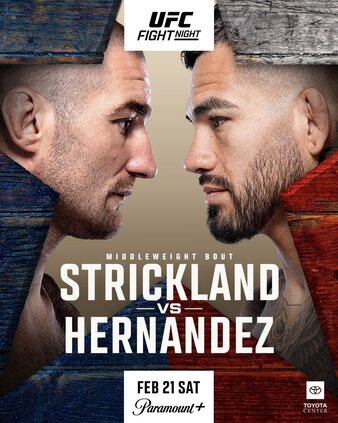
Ramiz Brahimaj vs Punahele Soriano
Men's Welterweight Bout • UFC Fight Night: Strickland vs Hernandez
Saturday, February 21, 2026 • 30ft Octagon (Large Cage) • Houston, Texas (Toyota Center)
Explore Detailed Fighter Profiles
Click on either the fighter's name or profile image for each fighter to access comprehensive UFC statistics including striking metrics, grappling data, clinch performance, complete fight history, offensive & defensive analytics, and round-by-round breakdowns.
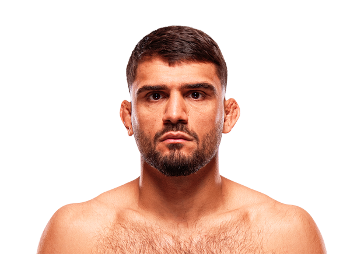
Ramiz Brahimaj
Fighter Metrics
Victory Methods
Win Round Distribution
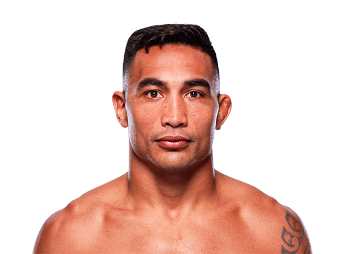
Punahele Soriano
Fighter Metrics
Victory Methods
Win Round Distribution
📋 Last 5 Fights - Ramiz Brahimaj
| Date | Opponent | Result | Method |
|---|---|---|---|
| 2025-10-04 | Austin Vanderford | W | Submission - Guillotine Choke (R2, 2:24) |
| 2025-05-31 | Billy Ray Goff | W | Submission - Guillotine Choke (R1, 3:16) |
| 2024-11-16 | Mickey Gall | W | KO/TKO - Right Hook (R1, 2:55) |
| 2024-05-18 | Themba Gorimbo | L | Decision - Unanimous (R3, 5:00) |
| 2022-02-26 | Micheal Gillmore | W | Submission - Rear Naked Choke (R1, 2:02) |
📋 Last 5 Fights - Punahele Soriano
| Date | Opponent | Result | Method |
|---|---|---|---|
| 2025-10-04 | Nikolay Veretennikov | W | Decision - Unanimous (R3, 5:00) |
| 2025-01-11 | Uros Medic | W | KO/TKO - Strikes (R1, 0:31) |
| 2024-06-08 | Miguel Baeza | W | Decision - Unanimous (R3, 5:00) |
| 2023-12-02 | Dustin Stoltzfus | L | Submission - Rear Naked Choke (R2, 4:10) |
| 2023-01-14 | Roman Kopylov | L | KO/TKO - Punches (R2, 3:19) |
Technical Analysis
Technical Score
Cardio Score
Overall Rating
📊 Technical Score
Calculated as the average of Striking Composite (66.0 vs 66.0) and Grappling Composite (78.0 vs 55.0). Balances overall striking effectiveness with grappling ability to measure complete technical skills.
💪 Cardio Score
Based on average fight duration, striking rate per minute, takedown rate, and finish rate. Measures cardiovascular endurance and ability to maintain pace throughout fights.
🎯 Overall Rating
Simple average of Technical Score and Cardio Score. Provides a holistic view of fighter capabilities combining skill level with physical conditioning and fight performance.
Striking Composite
Grappling Composite
Technical Radar Comparison
Visual comparison of key performance metrics between both fighters
📊 Detailed Statistical Comparison
🥊 Fight Analysis Breakdown
🧩 Ramiz Brahimaj Key Advantages
Brahimaj's 92% submission win rate (12 of 13 wins) isn't just a statistic—it's a complete fighting identity. His 1.7 submissions per 15 minutes represents elite-level finishing ability, especially when combined with Soriano's vulnerable 38% takedown defense. The front headlock specialist doesn't need perfect takedowns; he needs moments of chaos where Soriano's defensive structure breaks down. Every clinch exchange, every scramble, every defensive shot becomes a potential guillotine opportunity. Brahimaj's ability to threaten submissions from multiple positions—standing guillotines, mat returns to rear naked chokes, and transitions to the back—means Soriano must maintain perfect defensive awareness throughout the entire fight, a task that becomes increasingly difficult as fatigue sets in and the pressure compounds.
The alignment of Soriano's weak takedown defense (38%) with Brahimaj's submission-hunting style creates a stylistic mismatch that heavily favors the grappler. Soriano's submission loss to Stoltzfus (rear naked choke) proves he's vulnerable when his back is taken or when scrambles get messy. Brahimaj specializes in exactly these scenarios—creating chaos through clinch entries, capitalizing on defensive panic shots, and transitioning smoothly to submission positions. The Hawaiian's striker-first mentality means he lacks the grappling instincts to safely navigate these dangerous waters, and his tendency to prioritize escapes over position can lead directly into Brahimaj's guillotine traps.
Brahimaj's 11 first-round wins out of 13 total victories demonstrate an ability to capitalize on early opportunities before opponents settle into defensive rhythms. His most recent fights showcase this pattern—guillotine finishes against Vanderford (R2 2:24) and Goff (R1 3:16) both came when opponents tried to establish their own offense. Against Soriano, who has 8 first-round wins himself and tends to come out aggressive seeking early damage, this creates a dangerous dynamic. Soriano's forward pressure and volume-first approach may walk him directly into the clinch exchanges where Brahimaj thrives, and his lack of submission threat (0.0 Sub/15) means he can't deter Brahimaj from aggressively hunting neck and back positions.
⚠️ Unfavorable Scenarios
If Brahimaj can't close distance or force clinch exchanges, Soriano's 5.00 SLpM output creates significant problems. The 2.86 strikes-per-minute deficit means Brahimaj would be absorbing nearly double the volume while landing minimal offense. In a large cage with ample room to circle and reset, Soriano can maintain his preferred striking range and rack up significant strike differentials that judges reward. Brahimaj's 44% striking defense and low output (2.14 SLpM) make him vulnerable to getting outworked on the feet, and if his takedown attempts are consistently stuffed or countered, he lacks the striking weapons to threaten Soriano standing.
Soriano's 7 KO/TKO wins and fast-start tendencies (8 R1 wins) create genuine finishing threat if Brahimaj gets careless entering. The Hawaiian's 54% striking accuracy and power-punching style means clean counters can change fights instantly. If Brahimaj commits to predictable naked shots or leaves his chin exposed during level changes, Soriano's uppercuts and knees could catch him cold. Brahimaj's one career knockout loss proves he's not immune to getting caught, and against a volume-puncher who throws with intent to finish, defensive lapses become extremely costly.
📋 Likely Gameplan
Brahimaj should utilize feints and body jabs to close distance without eating clean counters, forcing Soriano into clinch exchanges where the submission threat dominates. His 1.99 TD/15 isn't about perfect doubles—it's about creating scrambles and transitions where his front headlock becomes dangerous. By varying entries (level changes, body locks from strikes, aggressive collar ties), Brahimaj keeps Soriano guessing and prevents him from timing clean defensive counters. The goal isn't clean takedowns; it's manufacturing chaos where Brahimaj's grappling IQ and submission instincts give him decisive advantages.
Against strikers with weak grappling foundations, Brahimaj should aggressively hunt guillotines during Soriano's defensive scrambles. When Soriano shoots panic takedowns or tries to disengage from clinch, those transitions become prime submission opportunities. Brahimaj's 100% finish rate means he doesn't need to win rounds—he needs one mistake, one moment where Soriano's neck is exposed or his back is taken. By maintaining constant submission threats and refusing to let Soriano settle into comfortable striking exchanges, Brahimaj creates the pressure-cooker environment where technical strikers make fatal errors.
🚀 Punahele Soriano Key Advantages
Soriano's 5.00 SLpM combined with 54% striking accuracy creates a devastating combination when the fight stays upright. The nearly 2.5x striking volume advantage means he can control the striking exchanges through sheer output while maintaining precision that Brahimaj (45% acc, 2.14 SLpM) simply can't match. In a large cage with room to circle and reset, Soriano can dictate range, force Brahimaj to pursue, and punish entries with counters. His 7 career KO/TKO wins prove this volume comes with genuine stopping power—he's not point-fighting, he's hunting damage. Against a grappler who absorbs 3.81 strikes per minute with only 44% defense, Soriano's combination of activity and accuracy creates compounding problems as rounds progress.
Soriano's 72.5" reach and 41" leg reach advantages (vs Brahimaj's 72" and 39") combined with the large cage create significant space for defensive resets and counter-striking opportunities. Every inch matters when defending takedowns and maintaining striking range, and Soriano can use his length to keep Brahimaj at bay with jabs, teeps, and low kicks that score while preventing clinch entries. His ability to move laterally and circle away from pressure becomes more effective with additional space, forcing Brahimaj to cover more ground and expend more energy chasing entries. When combined with his better takedown accuracy (56% vs 41%), Soriano also has better tools to finish his own shots if scrambles occur.
Soriano enters on a 3-fight win streak with recent performances showing improved decision-making and round management. His victories over Veretennikov (decision) and Baeza (decision) demonstrate he's learned to win rounds without relying solely on finishes, while his 31-second KO of Medic proves the finishing instinct remains sharp. This evolution makes him more dangerous—he can adapt game plans mid-fight and isn't one-dimensional. Against Brahimaj's single-threat approach, Soriano's versatility (75% finish rate across KO/Sub/Decision) gives him multiple paths to victory, and his confidence from recent success could translate to better defensive awareness against submission threats.
⚠️ Unfavorable Scenarios
Soriano's 38% takedown defense becomes catastrophic when combined with poor submission defense awareness. If he panics in clinch and shoots desperation takedowns or tries to disengage recklessly, he walks directly into Brahimaj's guillotine trap. His submission loss to Stoltzfus shows what happens when he gets stuck in grappling exchanges without structure—his instinct to escape quickly rather than control position creates opportunities for back takes and chokes. Against a specialist who has finished 12 of 13 wins by submission, any moment of grappling panic can end the fight instantly.
If Soriano can't finish early and the fight becomes a clinch-heavy grind, his offensive output diminishes dramatically. Brahimaj doesn't need to dominate position—he just needs to nullify striking exchanges and force ugly wrestling sequences where judges see "control" even without significant offense. Soriano's striker-first mentality means he lacks the grappling offense to threaten submissions or sweeps, making rounds where significant time is spent in clinch or on the ground losses by default even if no damage is inflicted.
📋 Likely Gameplan
Soriano should utilize the large cage space to maintain striking range through lateral movement, jabs to the body, and low kicks that score while keeping Brahimaj at distance. His 5.00 SLpM advantage only matters if he can prevent clinch exchanges, meaning constant movement and angles are essential. When Brahimaj pressures, Soriano should circle away from the fence rather than engaging in tie-ups. By staying active with volume and making Brahimaj chase, Soriano forces the grappler to expend energy while banking striking volume that judges reward.
Soriano's best path to victory involves front-loading damage in Round 1 before Brahimaj can establish his rhythm. His 8 first-round wins and power-punching style suggest he can capitalize on early exchanges when both fighters are fresh and defensive structures haven't settled. By establishing early striking success and potentially scoring knockdowns, Soriano creates psychological pressure that may make Brahimaj hesitant to engage. If Soriano can build an early lead through volume and damage, he forces Brahimaj into desperation mode where rushed takedown attempts become easier to defend and counter.
🎯 Fight Prediction Analysis
Data-driven prediction model based on statistical analysis
📊Detailed Analysis Summary
🏟️Cage Dynamics
The 30-foot octagon creates a dynamic that initially favors Soriano's striking range and movement capabilities, but becomes a double-edged sword as Brahimaj's pressure builds. The large cage gives Soriano ample space to circle, reset, and maintain his preferred striking distance where his 5.00 SLpM volume advantage can dominate. However, the extra space also means more territory for Brahimaj to cut off, and when he does trap Soriano against the fence, the extended perimeter becomes an asset—more fence line means fewer escape routes and more opportunities for Brahimaj to establish his clinch game and hunt submissions. Soriano must use the space intelligently, never allowing himself to be cornered, because once Brahimaj gets him stuck, the submission threat becomes immediate and overwhelming.
🎯Technical Breakdown
The statistical analysis reveals a classic striker vs grappler matchup with clear asymmetries that define the fight's likely trajectories. Soriano's 5.00 SLpM vs Brahimaj's 2.14 creates a 2.3x striking volume differential that heavily favors the Hawaiian when fights stay upright. His 54% striking accuracy vs Brahimaj's 45% compounds this advantage, meaning Soriano lands more frequently with higher output. However, Brahimaj's 1.7 submissions per 15 minutes paired with Soriano's vulnerable 38% takedown defense creates the fight's most dangerous dynamic. Brahimaj doesn't need to outstrike Soriano or even control dominant positions—he just needs moments where Soriano's defensive structure breaks down and neck or back positions become available. The 92% submission win rate isn't a statistic; it's a promise that any grappling exchange carries fight-ending potential.
🧩Key Battle Areas
Three critical battle areas will determine the outcome: Soriano's distance management vs Brahimaj's cage-cutting pressure, clinch defense and escape mechanics vs submission setups, and first-round finishing windows for both fighters. Soriano must maintain disciplined footwork and constant lateral movement to prevent Brahimaj from establishing prolonged clinch exchanges. When clinch does occur, Soriano's tendency to panic and make rash escape attempts plays directly into Brahimaj's guillotine trap—his submission loss to Stoltzfus demonstrates what happens when his grappling awareness fails. The first round becomes crucial for both fighters: Soriano needs early damage to establish psychological dominance and force Brahimaj into rushed entries, while Brahimaj hunts the early finish that has defined 11 of his 13 career wins. Whichever fighter successfully imposes their tempo in the opening minutes likely dictates how the remainder of the fight unfolds.
🏁Final Prediction
The most likely outcome is Punahele Soriano by Decision (32% probability), achieved through consistent volume striking, distance management, and successfully defending Brahimaj's clinch attempts over three rounds. Soriano's KO/TKO path (30%) becomes viable through his power punching and ability to capitalize on Brahimaj's defensive limitations, particularly if he can catch the grappler entering carelessly. Brahimaj's primary path to victory centers on Submission (28%), exploiting Soriano's weak takedown defense and submission awareness through guillotines, rear naked chokes, or transitions to the back during scrambles. The grappler's decision path (6%) requires controlling clinch exchanges and banking rounds through fence work, while his KO/TKO route (2%) remains unlikely given his limited striking output. The key differentiator: Soriano has multiple paths to victory (striking volume, power, movement), while Brahimaj's path is narrower but more definitive—when his submission game clicks, fights end immediately regardless of what happened in previous minutes.
💰 Betting Analysis: Model vs Market
Detailed value assessment in the betting market
📊Market Odds
🤖Analytical Model
💎Value Opportunities
MAXIMUM VALUE
GOOD VALUE
SLIGHT VALUE
⚠️Key Market Discrepancies
- • Overweights early KO volatility – Underprices five-round wrestling cycles.
- • Undervalues damage economy – Low SApM differential drives optics on cards.
- • Big-cage bias – Space helps early, but fence/rides erode it late.
🎯 Comprehensive Probabilistic Analysis
100 hypothetical fight simulation based on statistical data
🏆Outcome Distribution - Ramiz Brahimaj
Primary path via fence control and rides
Attritional GNP and accumulative pressure
Back-takes off rides create RNC chances
💥Outcome Distribution - Punahele Soriano
Best lane via intercepts and counters
Requires extended range control in big cage
Low historical submission profile
⏰Fight Timeline Analysis
⚡Window of Opportunity - Punahele Soriano
- • Round 1: Highest KO equity with power punching.
- • Perimeter control: Jabs + low kicks to maintain distance.
- • Volume bursts: Strike then reset; avoid extended clinch.
🎯Submission Threat - Ramiz Brahimaj
- • Clinch entries: Create scrambles where guillotines become dangerous.
- • Capitalize on panic: When Soriano tries to escape, hunt submissions.
- • Early finish: 85% of wins in R1; don't need to win rounds.
🎯 Final Confidence Assessment
Confidence level and uncertainty factors
Confidence Level
Strong edge via wrestling cycles and safer damage profile
✅Supporting Factors
- • Significant striking volume edge (5.00 vs 2.14 SLpM)
- • Better striking accuracy (54% vs 45%)
- • Large cage favors distance control
- • Hot streak with improved decision-making
⚠️Risk Factors
- • Intercept knees/uppercuts vs level changes
- • Big cage extends early range time
- • Soriano's high-volume surges if distance maintained
🏁Executive Summary
Punahele Soriano's volume striking advantage (5.00 SLpM vs 2.14) creates a clear path to victory when fights stay upright, especially in the large 30-foot cage where his reach and movement can dominate. However, Ramiz Brahimaj's elite submission threat (1.7 Sub/15min, 92% submission win rate) paired with Soriano's vulnerable takedown defense (38%) creates a dangerous dynamic where any clinch exchange carries fight-ending potential. The statistical differentials reveal a classic striker vs grappler matchup: Soriano's 2.3x striking volume advantage and 54% accuracy favor him significantly when distance is maintained, while Brahimaj's submission specialization means he doesn't need to win rounds—he just needs moments where Soriano's defensive structure breaks down. Soriano's recent evolution (3-fight win streak with improved decision-making) suggests better defensive awareness, but his submission loss to Stoltzfus proves the vulnerability remains real.
Prediction: Soriano by Decision most likely (32% probability) through consistent volume striking and distance management over three rounds; his KO/TKO path (30%) becomes viable through power punching and catching Brahimaj entering carelessly. Brahimaj's primary path to victory centers on Submission (28%), exploiting Soriano's weak takedown defense through guillotines, rear naked chokes, or back takes during scrambles. The fight's outcome hinges on whether Soriano can maintain disciplined footwork and prevent prolonged clinch exchanges, or if Brahimaj can manufacture the chaos where his submission instincts become decisive.