

Sean Strickland vs Anthony Hernandez
Men's Middleweight Bout • UFC Fight Night: Strickland vs. Hernandez
Saturday, February 21, 2026 • Toyota Center, Houston • 30ft Octagon (Large Cage)
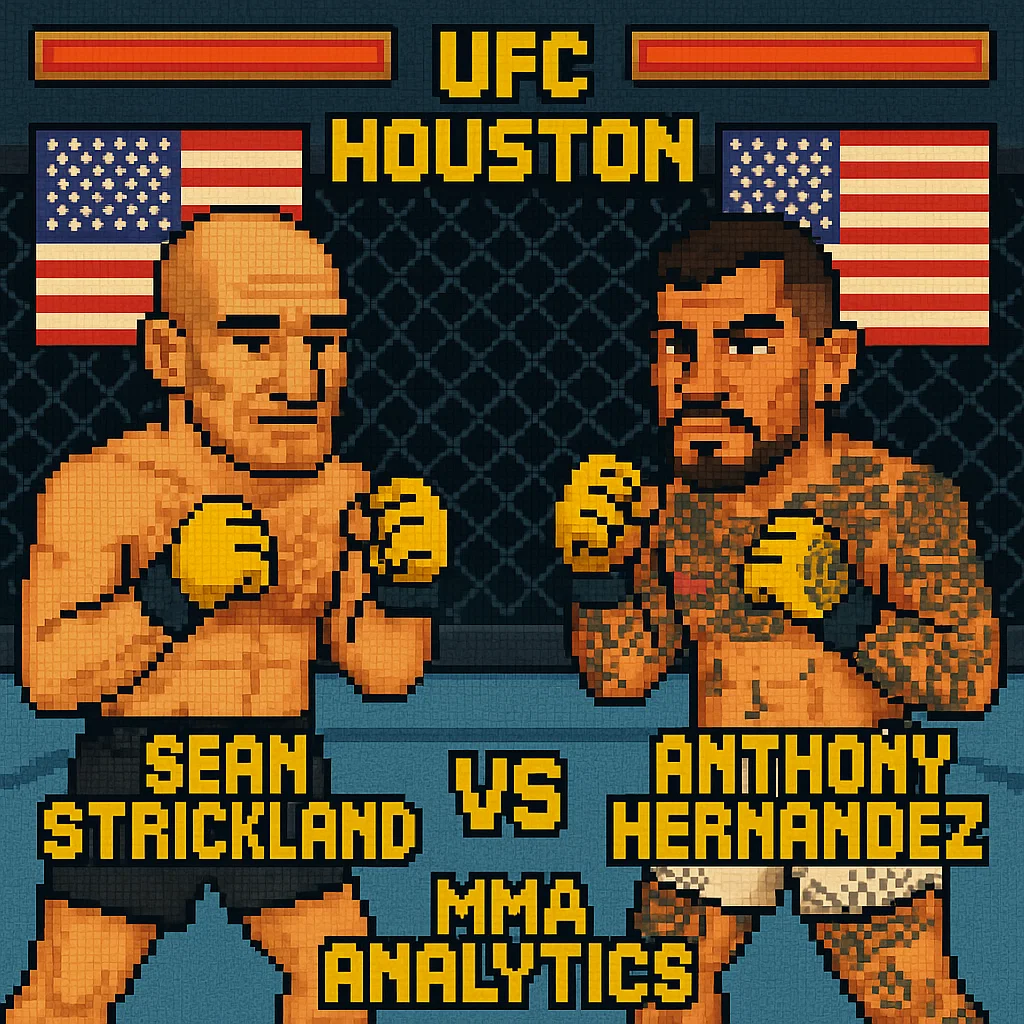
Explore Detailed Fighter Profiles
Click on either the fighter's name or profile image for each fighter to access comprehensive UFC statistics including striking metrics, grappling data, clinch performance, complete fight history, offensive & defensive analytics, and round-by-round breakdowns.
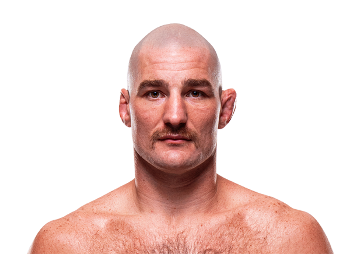
Sean Strickland
Fighter Metrics
Victory Methods
Win Round Distribution

Anthony Hernandez
Fighter Metrics
Victory Methods
Win Round Distribution
📋 Last 5 Fights - Sean Strickland
| Date | Opponent | Result | Method |
|---|---|---|---|
| 2025-02-08 | Dricus Du Plessis | L | Decision - Split (R5, 5:00) |
| 2024-06-01 | Paulo Costa | W | Decision - Unanimous (R5, 5:00) |
| 2024-01-20 | Dricus Du Plessis | L | Decision - Split (R5, 5:00) |
| 2023-09-09 | Israel Adesanya | W | Decision - Unanimous (R5, 5:00) |
| 2023-07-01 | Abus Magomedov | W | TKO - Punches (R2, 4:20) |
📋 Last 5 Fights - Anthony Hernandez
| Date | Opponent | Result | Method |
|---|---|---|---|
| 2025-08-09 | Roman Dolidze | W | Submission - Rear-Naked Choke (R4, 2:45) |
| 2025-02-22 | Brendan Allen | W | Decision - Unanimous (R3, 5:00) |
| 2024-10-19 | Michel Pereira | W | TKO - Elbows (R5, 2:22) |
| 2024-02-17 | Roman Kopylov | W | Submission - Rear-Naked Choke (R2, 3:23) |
| 2023-05-20 | Edmen Shahbazyan | W | TKO - Elbows and Punches (R3, 1:01) |
Technical Analysis
Technical Score
Cardio Score
Overall Rating
📊 Technical Score
Calculated as the average of Striking Composite (84.0 vs 74.0) and Grappling Composite (75.0 vs 90.0). Balances overall striking effectiveness with grappling ability to measure complete technical skills.
💪 Cardio Score
Based on average fight duration, striking rate per minute, takedown rate, and finish rate. Measures cardiovascular endurance and ability to maintain pace throughout fights.
🎯 Overall Rating
Simple average of Technical Score and Cardio Score. Provides a holistic view of fighter capabilities combining skill level with physical conditioning and fight performance.
Striking Composite
Grappling Composite
Technical Radar Comparison
Visual comparison of key performance metrics between both fighters
📊 Detailed Statistical Comparison
🥊 Fight Analysis Breakdown
🧩 Sean Strickland Key Advantages
Strickland's 5.95 strikes landed per minute versus Hernandez's 4.50 creates a sustained volume advantage in standing exchanges. More critically, his 61% striking defense versus Hernandez's 46% represents a 15-point defensive gap—massive at the championship level. This means Strickland can maintain high output while limiting incoming damage, banking clear rounds through sheer volume and defensive responsibility. His philly-shell style and high guard positioning allow him to absorb strikes on gloves and forearms while countering with straight punches. Against a fighter like Hernandez who struggles defensively, this creates a compounding advantage as the fight progresses.
Strickland's 76% takedown defense has been proven against elite competition including Dricus Du Plessis, Israel Adesanya, and Paulo Costa—all capable grapplers at middleweight. This isn't theoretical defense; it's battle-tested at the highest level. Hernandez's 45% takedown accuracy means he'll likely need 8-10 attempts to secure 3-4 successful takedowns. Each failed attempt costs energy, exposes him to counters, and allows Strickland to score with strikes during level changes. The 30-foot cage provides ample space for Strickland to sprawl, pivot, and reset, making Hernandez's entries longer and more costly.
Strickland's resume includes championship-level five-round battles against Adesanya (won decision), Du Plessis (two competitive losses), and Costa (clear decision win). His 16:03 average fight duration demonstrates not just cardio, but poise under championship pressure. He knows how to pace himself, bank rounds 1-3, and finish strong in rounds 4-5. This experience gap is tangible—Hernandez has never faced a five-round main event against top-5 competition. Strickland's ability to maintain output (5.95 SLpM) over 25 minutes while defending takedowns represents elite-level conditioning that Hernandez hasn't proven he can match.
⚠️ Unfavorable Scenarios
If Hernandez can chain takedowns and establish prolonged ground control, Strickland's striking advantages evaporate. While Strickland's defensive grappling is solid, spending 10+ minutes on his back over five rounds would bank rounds for Hernandez and potentially expose Strickland to submission attempts. Hernandez's 1.95 sub attempts per 15 minutes means he'll actively hunt finishes from top position rather than just holding.
Hernandez's submission game is legitimate—9 of his 15 career wins come via tap. His rear-naked chokes, guillotines, and anacondas can emerge suddenly from scrambles or transitions. If Strickland gets complacent defending takedowns or makes mistakes in transitions, Hernandez has the technical proficiency to capitalize quickly. This is a live threat throughout all five rounds.
📋 Likely Gameplan
Strickland should establish his jab early, using it to measure distance, disrupt Hernandez's entries, and rack up significant strike counts. His 1-2 combinations down the middle capitalize on Hernandez's poor defensive positioning. By keeping the fight at boxing range and maintaining center control, Strickland forces Hernandez into predictable level changes that are easier to defend and counter.
Strickland's proven strategy is banking clear rounds early through volume and defense, then maintaining pace in rounds 4-5 when opponents fade. Against Hernandez, this approach is critical—establish a lead before any potential late surges, and force Hernandez to chase the fight rather than settling into his grappling rhythm. Consistent 5.95 SLpM output over three rounds banks 48-47 or 49-46 leads on cards.
🚀 Anthony Hernandez Key Advantages
Hernandez's 6.27 takedowns per 15 minutes ranks among the highest in the middleweight division, representing relentless offensive wrestling. This volume creates cumulative fatigue—even defended takedowns drain energy and break rhythm. His chain-wrestling ability means one failed attempt immediately transitions to another angle, wearing down defensive postures over time. Combined with his 1.95 submission attempts per 15 minutes, Hernandez doesn't just seek control—he hunts finishes, creating constant danger from dominant positions.
Nine of Hernandez's fifteen career victories come via submission, including recent rear-naked chokes against Roman Dolidze (R4) and Roman Kopylov (R2). His submission game isn't opportunistic—it's systematic and technical. From back control, he chains RNCs with arm triangles; from top position, he threatens guillotines and anacondas. This finishing ability means every takedown carries legitimate finishing threat, forcing Strickland into defensive grappling that limits his offensive output.
Hernandez enters on a five-fight win streak with an 80% career finish rate, demonstrating he rarely leaves it to the judges. His recent performances show evolution—he's finishing elite competition (Dolidze, Pereira) and proving he can maintain pace into championship rounds (R5 TKO vs Pereira). This momentum creates psychological pressure; Strickland must respect the finishing threat, limiting his offensive aggression and forcing more defensive responsibility than he'd prefer.
⚠️ Unfavorable Scenarios
If Hernandez can't establish consistent takedowns and the fight remains primarily at striking range, his 46% striking defense becomes a massive liability. Strickland's 5.95 SLpM combined with 43% accuracy means Hernandez will absorb 2-3 clean strikes per minute for 25 minutes—compounding damage that creates visible swelling, fatigue, and scoring disadvantages on judges' cards. This scenario heavily favors Strickland's decision victory.
Hernandez's 45% takedown accuracy against Strickland's 76% defense means more failed attempts than successes. Each failed attempt—shooting in, getting sprawled on, fighting back to standing—costs significant energy. Over five rounds, 15-20 takedown attempts with only 6-8 successful creates cumulative fatigue that compromises both his striking output and his ability to finish late. This cardio drain becomes critical in rounds 4-5.
📋 Likely Gameplan
Hernandez must establish takedown threat early, forcing Strickland into defensive wrestling postures that limit his striking output. By shooting 4-5 times per round in rounds 1-2, Hernandez can test Strickland's defense, accumulate control time, and potentially bank early rounds on volume and aggression. The key is mixing entries—single-legs from distance, reactive shots off strikes, and cage clinch wrestling to prevent predictability.
Once takedowns are secured, Hernandez should immediately advance position and threaten submissions rather than settling for control. His 1.95 sub attempts per 15 minutes should increase to 3+ in this fight—constant guillotine threats, back-take attempts, and submission chains keep Strickland defensive and create finishing opportunities. Banking rounds through control is fine, but the submission threat represents Hernandez's clearest path to victory.
🎯 Fight Prediction Analysis
Data-driven prediction model based on statistical analysis
📊Detailed Analysis Summary
🥊Striking Battle
Strickland's 5.95 SLpM output versus Hernandez's 4.50 creates a clear and sustained volume advantage when the fight remains standing. More critically, Strickland's 61% striking defense versus Hernandez's 46% represents a massive 15-point defensive gap—at the championship level, this differential is massive. Hernandez will absorb significant damage during his entries, cage clinch attempts, and scrambles, compounding over five rounds into visible swelling and scoring deficits on judges' cards. The 30-foot octagon provides Strickland ample space to maintain his preferred boxing range, utilize his educated jab to measure distance and disrupt rhythm, and force Hernandez to cover more ground on takedown attempts—each extra step costing energy and exposing him to counters. While Hernandez's 64% striking accuracy is impressive on paper, it's largely built on shorter pocket exchanges before transitioning to grappling, not extended five-round boxing sessions against an elite pressure boxer with championship pedigree. Strickland's philly-shell defensive posture, high guard positioning, and ability to parry/slip while maintaining forward pressure create a nightmare scenario for Hernandez: constant incoming volume with limited clean opportunities to counter or establish his own offense. Historical data shows Strickland landing 148+ significant strikes per five-round fight against elite competition (Adesanya, Costa, Du Plessis), a pace Hernandez has never absorbed while maintaining his grappling effectiveness.
🤼Grappling Exchanges
Hernandez's 6.27 TD/15 versus Strickland's 0.73 illustrates a stark grappling activity differential—Hernandez is one of the division's most aggressive offensive wrestlers while Strickland rarely initiates grappling. But the real story lies in Strickland's 76% takedown defense—historically battle-tested and proven elite against top middleweights including Dricus Du Plessis (multiple five-rounders), Paulo Costa (known wrestling), and Israel Adesanya (underrated clinch game). This isn't theoretical defense; it's championship-level resistance proven against the best. Hernandez's 45% takedown accuracy creates a mathematical reality: he'll likely need 8-10 attempts per fight to secure 3-4 successful takedowns. Each failed attempt costs significant energy—shooting in, getting sprawled on, fighting back to standing, resetting position—while Strickland maintains relatively fresh legs and lungs. The 30-foot cage compounds this problem; Hernandez must cover more distance on entries, giving Strickland additional reaction time to sprawl, pivot, and counter. Once grappling exchanges do occur, Hernandez's 1.95 sub/15 becomes genuinely dangerous—his recent rear-naked choke finishes against Roman Dolidze (R4) and Roman Kopylov (R2) demonstrate technical proficiency and finishing instinct. However, Strickland's defensive grappling has proven sound against submission threats throughout his career, rarely getting caught in compromising positions even when forced to the mat. The critical question becomes: Can Hernandez impose consistent enough grappling pressure (3+ minutes of control per round) to overcome the striking deficits and cardio cost of failed attempts, or will Strickland's elite defense force him into an extended striking battle he's demonstrably ill-equipped to win against a volume boxer of this caliber?
⏰Five-Round Evolution
Strickland's 16:03 average fight duration versus Hernandez's 9:47 reveals fundamentally contrasting fighter profiles: Strickland thrives in grinding, attritional five-round battles that reach championship rounds where experience and pacing become decisive, while Hernandez typically finishes early (within 10 minutes) or wins decisions after banking early control time before opponents fade. This 6-minute differential represents more than statistics—it reveals different conditioning philosophies, pace management strategies, and psychological comfort zones. Strickland has repeatedly proven he can maintain consistent 5.95 SLpM output and defensive composure through all five rounds against elite competition: Israel Adesanya (25-minute striking clinic), Dricus Du Plessis (two competitive five-rounders), and Paulo Costa (relentless pressure for 25 minutes). His championship pedigree isn't theoretical—it's battle-tested at the highest level under championship pressure. Meanwhile, Hernandez's cardio in extended main events against top-five opposition remains relatively untested; his longest recent fights (Michel Pereira, Brendan Allen) involved significant grappling control that allowed rest periods rather than sustained five-round striking/defensive wrestling exchanges. If Strickland can defend takedowns consistently (even at 70-75% success rate) and keep substantial portions of rounds standing through Rounds 3-5, his experience advantages, conditioning reserves, and psychological comfort in championship rounds become progressively decisive. Historical data suggests Strickland actually increases output in Rounds 4-5 (averaging 6+ SLpM) when sensing victory, while Hernandez's late-round finishing attempts often represent desperation rather than sustainable pace. The fighter more comfortable at the 20-minute mark typically controls the final 5 minutes—and that's decisively Strickland based on proven championship experience.
🏁Final Prediction
The most likely outcome is Sean Strickland by Decision (44% probability), achieved through consistent striking volume, elite takedown defense, and superior championship-round experience and pacing. Strickland's path to victory involves: (1) Establishing jab range early in Round 1, forcing Hernandez to respect distance; (2) Landing 120-150+ significant strikes over five rounds through sustained 5.95 SLpM output; (3) Defending 70-80% of Hernandez's 8-10 takedown attempts, forcing him to expend energy on failed entries; (4) Banking clear Rounds 1-3 through volume and defense, building 30-27 or 29-28 leads; (5) Maintaining pace in Rounds 4-5 when Hernandez's cardio potentially fades, securing 48-47 or 49-46 unanimous decisions. This is Strickland's proven championship formula, executed successfully against Adesanya and Costa. Hernandez's best chance lies in Submission victory (20%), secured via persistent takedown attempts (6+ per fight) into dominant grappling positions and aggressive submission hunting. His path involves: (1) Mixing entries—reactive shots off strikes, cage clinch wrestling, level changes from distance—to prevent predictability; (2) Securing 3-4 successful takedowns and accumulating 8-12 minutes of control time; (3) Advancing to back control or mount and threatening rear-naked chokes, guillotines, or arm triangles; (4) Capitalizing on scrambles and transitions when Strickland attempts to stand. Recent submissions against Dolidze (R4 RNC) and Kopylov (R2 RNC) demonstrate this path remains viable. Hernandez's TKO path (9%) requires accumulating ground-and-pound damage from top positions or landing heavy shots during pocket exchanges—possible but less likely given Strickland's defensive competence and chin. Strickland's TKO equity (18%) emerges from attritional damage accumulation over five rounds against a fighter with demonstrably poor 46% striking defense—cumulative swelling, fatigue, and judges/referees potentially stopping the fight in Rounds 4-5 if Hernandez absorbs 150+ clean strikes without meaningful offense. The stylistic matchup heavily favors Strickland's strengths (volume striking, defense, five-round pacing) while exposing Hernandez's weaknesses (striking defense, championship-round inexperience, takedown accuracy versus elite defense). For Hernandez to win, nearly everything must go right—high takedown success rate, submission opportunities, Strickland fatigue—while Strickland simply needs to execute his proven gameplan with typical efficiency.
💰 Betting Analysis: Model vs Market
Detailed value assessment in the betting market
📊Market Odds
🤖Analytical Model
💎Value Opportunities
MAXIMUM VALUE
Model: 44% | Fair: +127
GOOD VALUE
Model: 20% | Fair: +400
SLIGHT VALUE
Model: 55% | Fair: -122
⚠️Key Market Discrepancies
- • Undervalues experience gap – Strickland's championship pedigree in 5-rounders
- • Overweights grappling threat – Hernandez's TD success vs elite defensive wrestling
- • Large cage dynamics – Space favors Strickland's movement and takedown defense
🎯 Comprehensive Probabilistic Analysis
100 hypothetical fight simulation based on statistical data
🏆Outcome Distribution - Sean Strickland
Primary path via volume striking and defense
Attritional damage over five rounds
Rare path via defensive counter
💥Outcome Distribution - Anthony Hernandez
Best lane via RNC and control grappling
Ground-and-pound or standing exchanges
Requires sustained grappling control
⏰Fight Timeline Analysis
🎯 Final Confidence Assessment
Confidence level and uncertainty factors
Confidence Level
Strong edge via defensive excellence and experience
✅Supporting Factors
- • Significant striking volume and defensive advantages
- • Elite 76% takedown defense in large cage
- • Proven championship-round cardio and experience
- • Consistent performance against elite competition
⚠️Risk Factors
- • Hernandez's elite submission threat (1.95 sub/15)
- • High takedown volume (6.27 TD/15) creates chances
- • Strickland's poor striking defense on takedown
🏁Executive Summary
Sean Strickland's experience, striking volume, and takedown defense create a clear pathway to victory in a five-round main event, while Anthony Hernandez must overcome significant defensive gaps and impose his grappling against an elite defensive wrestler. The statistical differentials favor Strickland: his 76% takedown defense versus Hernandez's 6.27 TD/15 represents the central battleground, while Strickland's 61% striking defense versus Hernandez's 46% ensures he'll win the damage accumulation battle in extended exchanges. Strickland's 16:03 average fight duration versus Hernandez's 9:47 demonstrates proven championship-round capability, critical in a five-round affair.
Prediction: Strickland by Decision most likely (44% probability) through consistent volume striking, takedown defense, and superior five-round experience; Hernandez's upset lane is Submission (20%) via persistent takedown attempts into dominant grappling positions. The fight's outcome hinges on whether Hernandez can impose enough grappling to overcome Strickland's striking advantages and championship pedigree.