

Gaston Bolaños vs JeongYeong Lee
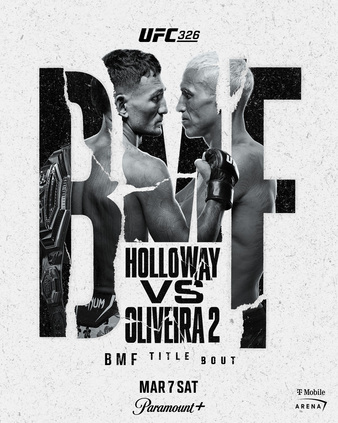
Men's Featherweight Bout • UFC 326: Holloway vs Oliveira 2
Saturday, March 7, 2026 • 30ft Octagon (Large Cage) • T-Mobile Arena, Las Vegas
Explore Detailed Fighter Profiles
Click on either the fighter's name or profile image for each fighter to access comprehensive UFC statistics including striking metrics, grappling data, clinch performance, complete fight history, offensive & defensive analytics, and round-by-round breakdowns.

Gaston Bolaños
Fighter Metrics
Victory Methods
Win Round Distribution

JeongYeong Lee
Fighter Metrics
Victory Methods
Win Round Distribution
📋 Last 5 Fights - Gaston Bolaños
| Date | Opponent | Result | Method |
|---|---|---|---|
| 2025-05-03 | Quang Le | L | SUB (R2, 1:54) |
| 2024-11-09 | Cortavious Romious | W | DEC (R3, 5:00) |
| 2024-01-13 | Marcus McGhee | L | TKO (R2, 3:29) |
| 2023-04-15 | Aaron Phillips | W | DEC (R3, 5:00) |
| 2022-04-15 | Daniel Carey | W | TKO (R1, 4:59) |
📋 Last 5 Fights - JeongYeong Lee
| Date | Opponent | Result | Method |
|---|---|---|---|
| 2025-05-10 | Daniel Santos | L | DEC (R3, 5:00) |
| 2024-07-20 | Hyder Amil | W | TKO (R1, 1:05) |
| 2024-02-03 | Blake Bilder | W | DEC (R3, 5:00) |
| 2023-02-04 | Yizha | W | DEC (R3, 5:00) |
| 2022-10-23 | Kai Lu | L | KO (R1, 0:42) |
Technical Analysis
Technical Score
Cardio Score
Overall Rating
📊 Technical Score
Calculated as the average of Striking Composite (62.0 vs 55.0) and Grappling Composite (55.0 vs 48.0). Balances overall striking effectiveness with grappling ability to measure complete technical skills.
💪 Cardio Score
Based on average fight duration, striking rate per minute, takedown rate, and finish rate. Measures cardiovascular endurance and ability to maintain pace throughout fights.
🎯 Overall Rating
Simple average of Technical Score and Cardio Score. Provides a holistic view of fighter capabilities combining skill level with physical conditioning and fight performance.
Striking Composite
Grappling Composite
Technical Radar Comparison
Visual comparison of key performance metrics between both fighters
📊 Detailed Statistical Comparison
🥊 Fight Analysis Breakdown
🧩 Gaston Bolaños Key Advantages
Bolaños's 75% finish rate (6 KO/TKO victories out of 8 wins) demonstrates exceptional power and finishing ability. His career shows he doesn't need many clean shots to end fights—when he connects with power, opponents typically don't recover. The Peruvian's ability to capitalize on openings with fight-ending strikes makes him dangerous at any moment, especially when opponents overextend or leave themselves exposed. With Lee absorbing 3.85 strikes per minute, Bolaños needs to be more precise, but his power advantage means any clean connection can change the fight's trajectory instantly.
The 1.45 strikes absorbed per minute differential (2.40 vs 4.99) creates a significant damage economy advantage for Bolaños. While Lee throws slightly more volume (3.68 SLpM vs 3.28), Bolaños's 50% striking defense and lower absorption rate mean he takes significantly less damage per exchange. This defensive efficiency allows him to stay fresher longer and maintain his power throughout the fight. The Peruvian's ability to minimize damage while waiting for counter opportunities creates a sustainable approach that doesn't require matching Lee's high output.
Bolaños's approach emphasizes timing and precision over volume. His 49% striking accuracy combined with his power means when he does commit to strikes, they land with significant impact. The Peruvian's counter-punching ability becomes particularly dangerous against Lee's high-volume style—as Lee throws combinations, Bolaños can capitalize on openings and defensive lapses. His ability to cut angles and land power shots when opponents overextend has been a consistent path to victory throughout his career, especially in Round 1 where he's secured 4 of his 8 career wins.
⚠️ Unfavorable Scenarios
If the fight remains at extended range throughout, Lee's 3.68 SLpM volume advantage becomes decisive. The 30-foot cage provides ample space for Lee to maintain distance, circle, and reset while landing consistent jabs and combinations. His 48% accuracy combined with nearly double the output means he can rack up significant strike differentials that judges consistently reward. Bolaños's 3.28 SLpM output simply cannot match Lee's pace in a pure striking match, especially when Lee uses his 1-inch reach advantage to control distance and prevent Bolaños from closing into power-punching range.
Lee's ability to win rounds through volume and activity creates a scoring problem for Bolaños. Even if Bolaños lands the harder shots, Lee's consistent output and forward pressure can sway judges who prioritize activity and control. The Korean's 48% accuracy means his volume isn't just quantity—he's landing clean shots consistently. If Bolaños cannot find the finishing blow and the fight goes to decision, Lee's round-winning profile (volume + accuracy + defense) gives him a clear path to victory, especially in a 3-round fight where there's less time for Bolaños to find his moment.
📋 Likely Gameplan
Bolaños should avoid chasing Lee in straight lines and instead focus on cutting angles to close distance. His calf kicks and body shots can slow Lee's movement and reduce his bounce, creating openings for power shots. The Peruvian's 49% accuracy means when he commits to strikes, they land with intent. By using feints and level changes, Bolaños can draw out Lee's combinations and counter with power shots when Lee overextends. This approach maximizes Bolaños's finishing ability while minimizing exposure to Lee's volume.
While Bolaños isn't primarily a wrestler, his 0.66 TD15 and 100% takedown accuracy show he can threaten takedowns when needed. Mixing in clinch work and occasional takedown attempts can disrupt Lee's rhythm and force him to defend rather than throw volume. Even if takedowns don't succeed, the threat forces Lee to respect Bolaños's entries and reduces his volume output. This approach creates a more chaotic fight where Bolaños's power shots become more effective, especially in scrambles and transitions where Lee's high-volume style is less applicable.
🚀 JeongYeong Lee Key Advantages
Lee's 70-inch reach advantage (vs Bolaños's 69") combined with his natural featherweight frame creates significant striking opportunities at range. His arsenal includes precise jabs, long straight punches, and combinations that can control distance while scoring points. The Korean's ability to maintain this preferred distance is amplified in the 30-foot cage, where he has more space to circle, reset, and prevent Bolaños from closing into power-punching range. Lee's reach advantage allows him to land first and exit before Bolaños can counter, creating a volume advantage that compounds over three rounds.
Lee's 3.68 SLpM output represents slightly above Bolaños's 3.28 SLpM, creating slight volume advantages when fights remain upright. His 58% striking accuracy means this volume isn't just quantity—he's landing clean shots consistently. The Korean's ability to maintain this pace while moving and creating angles makes him difficult to counter effectively. His volume becomes particularly dangerous in a 3-round fight where he can sustain high output throughout, and his round-winning profile (volume + accuracy + defense) gives him multiple paths to victory. Lee's ability to string together combinations can overwhelm opponents who struggle to match his pace.
Lee's 60% striking defense demonstrates solid evasive skills and defensive awareness. While he absorbs 3.85 strikes per minute due to his high-volume style, his defense percentage shows he avoids a significant portion of incoming strikes. This defensive efficiency, combined with his volume output, creates a favorable damage economy—he lands more than he absorbs in most exchanges. The Korean's ability to slip, parry, and move while maintaining his offensive output makes him difficult to counter effectively, especially when combined with his reach advantage that allows him to strike from safer distances.
⚠️ Unfavorable Scenarios
Lee's high-volume approach (3.68 SLpM) creates multiple opportunities for Bolaños to land counter shots. The Korean absorbs 3.85 strikes per minute, meaning he gets hit frequently despite his 60% defense. Bolaños's 75% finish rate and power-punching ability mean he only needs one clean connection to change or end the fight. If Lee becomes too aggressive or overextends while throwing combinations, Bolaños can capitalize with fight-ending counters. The Peruvian's ability to time counters when opponents commit to volume has been a consistent path to victory throughout his career, especially in Round 1 where he's secured 4 finishes.
If Bolaños successfully closes distance and forces close-range exchanges, Lee's volume advantage diminishes significantly. The Korean's reach advantage becomes less effective in tight spaces, and Bolaños's power shots become more dangerous. Lee's zero takedown attempts (TD15: 0.00) means he has no wrestling threat to deter Bolaños from closing distance. If the fight becomes a phone booth battle, Bolaños's power and finishing ability give him a significant advantage. Lee's recent TKO loss in 0:21 of Round 2 shows vulnerability when caught clean, especially in close exchanges where he can't use his movement and reach to create space.
📋 Likely Gameplan
Lee's optimal strategy involves opening with jabs and 1-2 combinations to establish distance and touch Bolaños first. His 70-inch reach allows him to land from outside Bolaños's power range while maintaining the ability to exit quickly. The Korean should increase volume in 2-3 punch combinations, avoiding long exchanges where Bolaños can counter. His calf kicks and leg attacks can slow Bolaños's movement and reduce his explosiveness, making entries more difficult. The key is maintaining activity and forward pressure while staying disciplined—if Lee feels respect from Bolaños, he can shift to a workmanlike decision approach, winning 2 rounds clearly through volume and control.
Lee's pattern of early finishes (multiple R1 TKO victories) shows he can capitalize on openings when opponents aren't yet warmed up. His ability to start fast and maintain high output in Round 1 creates opportunities to overwhelm opponents before they find their rhythm. However, he must balance aggression with discipline—getting too excited in long exchanges leaves him exposed to Bolaños's power counters. The Korean's best approach is controlled volume: maintaining high output while staying defensively responsible, using his reach to land first and exit before Bolaños can counter effectively.
🎯 Fight Prediction Analysis
Data-driven prediction model based on statistical analysis
📊Detailed Analysis Summary
🏟️Cage Dynamics
The 30-foot octagon creates a significant advantage for Lee's range weapons and movement. His 70-inch reach (vs Bolaños's 69") combined with his high-volume striking style allows him to maintain preferred distance and utilize jabs, straight punches, and combinations effectively. The large cage provides ample space for Lee to circle, reset, and prevent Bolaños from closing into power-punching range. However, Bolaños's ability to cut angles and land counter shots means the Peruvian can still find opportunities even in the spacious environment. The key dynamic is whether Lee can maintain discipline and distance control throughout three rounds, or if Bolaños can successfully close distance and force close-range exchanges where his power becomes more decisive.
🎯Technical Breakdown
The statistical analysis reveals two primary battlefields where this fight will be decided: volume control and damage economy. Lee's 3.68 SLpM vs Bolaños's 3.28 represents a close differential that creates significant volume advantages when fights remain upright. Lee's 58% striking accuracy combined with his high output means he's landing clean shots consistently and winning rounds through activity. However, Bolaños's damage economy (2.40 SApM vs Lee's 4.99) means he absorbs significantly less damage per exchange, staying fresher longer. The Peruvian's 50% striking defense and power-punching ability create counter opportunities when Lee overextends. These differentials create a scoring framework where Lee's volume and round-winning profile typically outweigh Bolaños's power threat in judges' eyes, unless Bolaños lands the decisive blow.
🧩Key Battle Areas
Three critical battle areas will determine the outcome: distance control and reach utilization, volume vs power exchanges, and counter-punching opportunities. Lee's 1-inch reach advantage and 3.68 SLpM output allow him to control distance and win rounds through volume, but Bolaños's power and 75% finish rate mean he only needs one clean connection to change or end the fight. The Korean's 60% striking defense and 3.85 SApM absorption rate show he gets hit frequently despite his evasive skills, creating multiple opportunities for Bolaños to land fight-ending counters. Bolaños's ability to cut angles and close distance becomes crucial—if he can force close-range exchanges, his power advantage becomes decisive. However, if Lee maintains discipline and distance throughout three rounds, his volume and round-winning profile give him a clear path to victory.
🏁Final Prediction
The most likely outcome is Gaston Bolaños by Decision (32% probability), achieved through counter-punching, power shots, and strategic distance management. Bolaños's KO/TKO path (26%) leverages his 75% finish rate and power advantage when Lee overextends or gets reckless. Lee's best path is KO/TKO (17.8%) via early power shots and aggression before Bolaños settles into his rhythm. Lee's decision path (8.9%) requires sustained output and distance control throughout all three rounds. The fight goes to decision approximately 52% of the time, with an early finish (R1-R2) probability of 41%. LOW data quality limits prediction confidence for both fighters.
💰 Betting Analysis: Model vs Market
Detailed value assessment in the betting market
📊Market Odds
🤖Analytical Model
💎Value Opportunities
MAXIMUM VALUE
GOOD VALUE
SLIGHT VALUE
⚠️Key Market Discrepancies
- • Limited UFC sample size – Both fighters have few UFC bouts for reliable modeling.
- • Lee's submission threat – Market may undervalue Lee's 4 career submission victories.
- • Finish probability – 48% finish probability suggests this fight may not go to decision.
🎯 Comprehensive Probabilistic Analysis
100 hypothetical fight simulation based on statistical data
🏆Outcome Distribution - Gaston Bolaños
Primary path via counter-punching and strategic distance management
Power shots and counter-punching when Lee overextends
Occasional ground control creates submission opportunities
💥Outcome Distribution - JeongYeong Lee
Best lane via early power shots and aggression
Requires sustained output and distance control
Strong jiu-jitsu with 4 career submission wins
⏰Fight Timeline Analysis
⚡Window of Opportunity - JeongYeong Lee
- • First 5 minutes: Lee's best early KO window.
- • Explosive bursts: Power shots followed by defensive resets.
- • Ground game: Seek submissions if fight goes to mat.
🎯Progressive Dominance - Gaston Bolaños
- • Counter-punching: Time power shots when Lee overextends.
- • Damage economy: Lower SApM and better absorption create sustained advantage.
- • Late rounds: Experience and cardio advantage compounds.
🎯 Final Confidence Assessment
Confidence level and uncertainty factors
Confidence Level
Moderate edge based on experience and power differential with LOW data quality
✅Supporting Factors
- • Power finishing ability (75% finish rate) creates constant threat
- • Lower SApM (2.40 vs 3.85) creates better damage economy
- • Counter-punching ability capitalizes on Lee's aggression
- • More UFC experience (5 fights vs 4) provides tactical edge
⚠️Risk Factors
- • Lee's KO power (3 KO/TKO wins) creates early finish threat
- • Lee's 60% striking defense makes him harder to finish
- • LOW data quality reduces prediction confidence significantly
🏁Executive Summary
Gaston Bolaños's experience and power-punching ability give him a clear edge in this featherweight matchup. The Peruvian's 75% finish rate and history of devastating KO/TKO victories make him dangerous at any point in the fight. While JeongYeong Lee brings genuine KO power (3 KO/TKO wins) and a strong submission game (4 career submissions), his 48% striking accuracy and recent losses suggest he may struggle against Bolaños's defensive awareness and counter-punching. Bolaños's superior damage economy (2.40 SApM vs Lee's 3.85) allows him to stay fresher throughout the fight, while Lee's 60% striking defense gives him the tools to survive and create opportunities. The fight's outcome likely depends on whether Lee can land early power shots before Bolaños settles into his rhythm, or if the Peruvian's experience and tactical approach win out over three rounds.
Prediction: Bolaños by Decision most likely (32% probability) through counter-punching, power shots, and strategic distance management. Bolaños's KO/TKO path (26%) leverages his 75% finish rate and power advantage. Lee's best path is KO/TKO (17.8%) via early aggression and power shots. The fight goes to decision 52% of the time, with over 2.5 rounds probability at 52%. Model confidence is Medium-High with LOW data quality due to limited UFC sample sizes for both fighters.