

Caio Borralho vs Reinier de Ridder
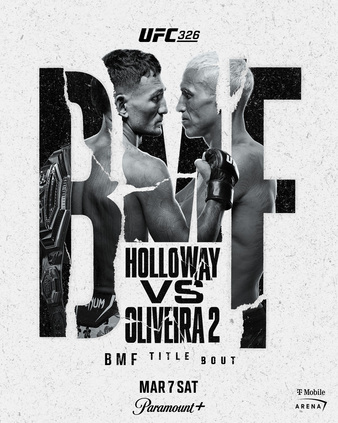
Men's Middleweight Bout • UFC 326: Holloway vs Oliveira 2
Saturday, March 7, 2026 • 30ft Octagon (Large Cage)
Explore Detailed Fighter Profiles
Click on either the fighter's name or profile image for each fighter to access comprehensive UFC statistics including striking metrics, grappling data, clinch performance, complete fight history, offensive & defensive analytics, and round-by-round breakdowns.
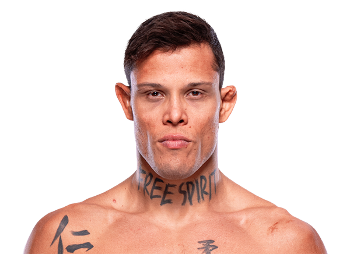
Caio Borralho
17-2-0
Caio Borralho
Fighter Metrics
Victory Methods
Win Round Distribution

Reinier de Ridder
21-3-0
Reinier de Ridder
Fighter Metrics
Victory Methods
Win Round Distribution
📋 Last 5 Fights - Caio Borralho
| Date | Opponent | Result | Method |
|---|---|---|---|
| 2025-09-06 | Nassourdine Imavov | L | Decision - Unanimous (R5, 5:00) |
| 2025-02-28 | Brendan Allen | W | Decision - Unanimous (R2, 5:00) |
| 2024-08-24 | Jared Cannonier | W | Decision - Unanimous (R5, 5:00) |
| 2024-05-04 | Paul Craig | W | TKO - Left Cross (R2, 2:10) |
| 2023-11-04 | Abus Magomedov | W | Decision - Unanimous (R3, 5:00) |
📋 Last 5 Fights - Reinier de Ridder
| Date | Opponent | Result | Method |
|---|---|---|---|
| 2025-10-18 | Brendan Allen | L | TKO - Retirement (R4, 5:00) |
| 2025-07-26 | Robert Whittaker | W | Decision - Split (R5, 5:00) |
| 2025-05-03 | Bo Nickal | W | TKO - Knee (R2, 1:53) |
| 2025-01-18 | Kevin Holland | W | Submission - Rear Naked Choke (R1, 3:31) |
| 2024-11-09 | Gerald Meerschaert | W | Submission - Arm Triangle (R3, 1:44) |
Technical Analysis
Technical Score
Cardio Score
Overall Rating
📊 Technical Score
Calculated as the average of Striking Composite (66.0 vs 66.0) and Grappling Composite (78.0 vs 55.0). Balances overall striking effectiveness with grappling ability to measure complete technical skills.
💪 Cardio Score
Based on average fight duration, striking rate per minute, takedown rate, and finish rate. Measures cardiovascular endurance and ability to maintain pace throughout fights.
🎯 Overall Rating
Simple average of Technical Score and Cardio Score. Provides a holistic view of fighter capabilities combining skill level with physical conditioning and fight performance.
Striking Composite
Grappling Composite
📊 Technical Radar Comparison
📊 Metrics Legend
📊 Detailed Statistical Comparison
🥊 Fight Analysis Breakdown
🧩 Caio Borralho Key Advantages
The gap of StrDef (63% vs 44%) is the heart of the handicap. In a large cage, the fighter who can make opponents miss and "reset range" typically wins minutes. Borralho is that profile. If de Ridder is forced to walk into clean strikes, his 44% defense suggests he will be hit significantly. This defensive advantage compounds over three rounds—every entry attempt by de Ridder becomes a potential scoring opportunity for Borralho, while Borralho's ability to evade and counter creates a frustrating dynamic for the grappler.
Borralho's 77% takedown defense is crucial against a grappler of de Ridder's volume (4.74 TD/15). While de Ridder will likely attempt multiple takedowns, Borralho's ability to stuff the first layer and avoid sustained control is key. The large cage (30ft) provides Borralho with space to pivot and reset, preventing de Ridder from easily pinning him against the fence. Even if de Ridder secures a takedown, Borralho's defensive grappling and ability to wall-walk without giving up his back minimizes the submission threat.
Borralho's 2.34 SApM demonstrates excellent damage economy. Combined with his 63% StrDef, he makes opponents miss while maintaining his own output (3.61 SLpM). This efficiency is critical in a three-round fight where every clean strike counts. Borralho's ability to control distance with jabs and low kicks, pivot away from entries, and avoid damage creates a scoring framework that judges consistently reward. His 60% StrAcc means when he does throw, he lands cleanly, maximizing the impact of his output.
⚠️ Unfavorable Scenarios
Although Borralho has strong takedown defense (77%), a single successful takedown or clinch win by de Ridder can change the fight completely. De Ridder's SubPer15 of 1.36 and 85.7% finish rate indicate that when he gets to a dominant position, he capitalizes. If Borralho gives up his back during a wall-walk or gets caught in a scramble, de Ridder's submission threat becomes very real. One mistake in defensive grappling could result in a quick finish, regardless of how well Borralho was controlling the fight up to that point.
If Borralho becomes too passive and doesn't punish de Ridder's entries effectively, the grappler can accumulate takedown attempts until one succeeds. De Ridder's 4.74 TD/15 volume means he will keep coming, and even with 39% accuracy, repeated attempts increase the probability of success. If Borralho spends too much time "playing safe" without making de Ridder pay for entries, he opens the door for the grappler to eventually secure a takedown and create a dangerous scramble situation.
📋 Likely Gameplan
Borralho should utilize heavy jab and low kick combinations to control distance and punish de Ridder's entries. His 60% StrAcc and 63% StrDef create a favorable striking dynamic where he can land clean shots while avoiding return fire. The jab keeps de Ridder at range, while low kicks disrupt the grappler's base and make takedown attempts more difficult. Pivoting away from de Ridder's power hand and maintaining lateral movement prevents the grappler from easily closing distance and securing clinch positions.
In clinch situations, Borralho should prioritize underhooks, head position (head on chest), and quick breaks. He cannot allow de Ridder to establish sustained control or work for trips and body locks. The goal is to force de Ridder to "restart" his entry process repeatedly, draining energy and reducing takedown success rate. Quick breaks back to striking range reset the fight state and allow Borralho to continue accumulating minutes with clean strikes.
If Borralho is taken down, his priority #1 must be getting to the fence and standing up. He cannot play guard or allow de Ridder to establish back control. The wall-walk must be executed with proper head position and hand fighting to prevent de Ridder from securing hooks or transitioning to back mount. Borralho's 77% TDDef suggests he can get back to his feet, but he must do so without giving up his back or allowing submission attempts. wrist control, and short hammerfists rather than submission attempts. This approach maximizes scoring while minimizing risk—Borralho can bank minutes through distance control and defensive positioning without exposing himself to takedown attempts or submission threats. Borralho's 77% takedown defense suggests he can maintain standing position and reset the fight state, making this strategy both effective and sustainable over three rounds.
🚀 Reinier de Ridder Key Advantages
De Ridder's 4.74 takedowns per 15 minutes creates constant pressure that forces opponents to engage in grappling exchanges. Even with 39% accuracy, this volume means de Ridder will keep coming until he secures a takedown or clinch position. His approach doesn't require winning 15 minutes—he needs to win 30-60 seconds: one scramble, one back take, one submission opportunity. The large cage initially helps Borralho, but de Ridder's persistence and ability to chain attempts eventually create openings. His 1.36 SubPer15 indicates he capitalizes when these opportunities arise.
De Ridder's 85.7% finish rate and 67% of wins by submission create a "short win condition" that doesn't require outpointing Borralho over three rounds. In a three-round fight, this finish threat becomes even more valuable—de Ridder doesn't need to win every minute, he needs to win one critical sequence. His 14 career submission wins demonstrate his ability to capitalize on back takes, scrambles, and dominant positions. Once de Ridder secures a takedown and establishes control, his submission threat becomes very real, regardless of how well Borralho was controlling the striking exchanges.
De Ridder's physical advantages (+2.5 inches height, +3 inches reach) are useful for entering clinch with less punishment. His 76-inch height and 78-inch reach allow him to control distance and generate leverage in grappling exchanges. However, the large cage complicates translating this size advantage into automatic control—there's more space for Borralho to pivot and avoid being pinned against the fence. De Ridder's length becomes most effective when he can secure clinch positions and use his reach to control Borralho's posture and create takedown opportunities.
⚠️ Unfavorable Scenarios
De Ridder's 44% StrDef is a major concern against a striker like Borralho (60% StrAcc, 63% StrDef). This defensive weakness means de Ridder will likely absorb significant punishment on his entries. Every takedown attempt becomes a potential scoring opportunity for Borralho, who can land clean jabs, low kicks, and check hooks as de Ridder closes distance. With 44% defense, de Ridder's entries become increasingly costly—he may secure takedowns, but at the expense of accumulating damage that compounds over three rounds. This creates a dangerous dynamic where de Ridder's path to victory (grappling) requires him to walk through Borralho's best weapons (striking).
De Ridder's 39% TDAcc means he needs multiple attempts to secure takedowns, and each failed attempt costs energy and exposes him to Borralho's counter-striking. If Borralho defends the first layer effectively and doesn't allow de Ridder to pin him against the fence, de Ridder may spend significant energy on unsuccessful attempts. Combined with Borralho's 77% TDDef, de Ridder could find himself in a frustrating cycle of failed takedowns and counter-strikes. This becomes particularly problematic if Borralho can maintain distance and force de Ridder to chase him around the large cage, draining the grappler's gas tank without securing the positions he needs.
📋 Likely Gameplan
De Ridder's optimal strategy involves using long guard/teep to enter, but the primary objective is securing clinch and fence positions. He shouldn't obsess over "clean" takedowns— trips, body locks, and mat returns are equally effective. Once in clinch, de Ridder should use his length to control Borralho's posture and create takedown opportunities. The fence becomes crucial—de Ridder needs to pin Borralho against the cage to limit his movement and create the scrambles where de Ridder's submission threat becomes most dangerous. His goal is to force grappling exchanges where his 1.36 SubPer15 and 85.7% finish rate become decisive factors.
In scrambles, de Ridder's priority should be back takes over ground-and-pound. His win condition is the submission, not accumulating control time. Once de Ridder secures a takedown or dominant position, he should immediately look to transition to back mount or secure hooks. His 14 career submission wins demonstrate his ability to capitalize on these positions, and his 67% submission win rate indicates this is his most reliable path to victory. De Ridder doesn't need to win every minute—he needs to win one critical sequence where he can secure a choke or joint lock.
🎯 Fight Prediction Analysis
Data-driven prediction model based on statistical analysis
📊Detailed Analysis Summary
🏟️Cage Dynamics
The 30-foot octagon creates a fascinating dynamic in this matchup—initially favoring Borralho's distance control and defensive positioning, but providing de Ridder with space to reset after failed takedown attempts. Borralho's 75-inch reach and defensive skills give him advantages when he can maintain distance and utilize his jabs, low kicks, and pivots effectively. However, de Ridder's high-volume grappling (4.74 TD/15) means he will keep attempting takedowns, and the large cage provides reset opportunities for both fighters. Borralho's ability to defend takedowns and pivot away creates scoring opportunities, but de Ridder's persistence means he will eventually create scrambles where his submission threat becomes decisive. The large cage initially helps Borralho, but de Ridder's finish ability means one successful sequence can change the fight completely.
🎯Technical Breakdown
The statistical analysis reveals two primary battlefields where this fight will be decided: striking defense and takedown defense. Borralho's 63% StrDef vs de Ridder's 44% represents a massive differential that fundamentally alters fight control and scoring dynamics. While de Ridder's grappling volume (4.74 TD/15, 1.36 SubPer15) creates constant pressure, Borralho's damage economy (2.34 SApM vs 2.21) and superior defensive skills mean he absorbs significantly less damage while maintaining offensive output. Borralho's 77% takedown defense combined with his striking threat forces de Ridder into uncomfortable exchanges where his high-volume grappling approach becomes less effective. These differentials create a scoring framework where Borralho's distance control and defensive efficiency consistently outweigh de Ridder's grappling attempts in judges' eyes, unless de Ridder secures a submission.
🧩Key Battle Areas
Three critical battle areas will determine the outcome: first-layer takedown defense vs high-volume grappling attempts, counter-striking vs entry attempts, and submission threat vs defensive positioning. Borralho's 77% takedown defense suggests he can stuff initial attempts, but de Ridder's persistence (4.74 TD/15) and re-shot ability mean he will keep coming. Borralho's counter-striking (jabs, low kicks, check hooks) represents his most effective tools against de Ridder's entries, and his 63% StrDef means he can land clean shots while avoiding return fire. De Ridder's submission threat (1.36 SubPer15, 85.7% finish rate) means one successful takedown or scramble can end the fight, regardless of how well Borralho was controlling the distance exchanges. The large cage provides reset opportunities, but de Ridder's finish ability creates constant danger.
🏁Final Prediction
The most likely outcome is Caio Borralho by Decision (44% probability), achieved through distance control, superior striking defense (63% vs 44%), and effective takedown defense (77%) that prevents de Ridder from establishing sustained control. Borralho's KO/TKO path (16%) becomes viable if his counter-striking accumulates damage as de Ridder attempts entries, particularly if the grappler becomes frustrated and forces exchanges. De Ridder's upset lane centers on Submission (24%) via back take or scramble—his 85.7% finish rate and 1.36 SubPer15 indicate he capitalizes when opportunities arise. De Ridder's decision path (4%) requires maintaining control throughout three rounds without finishing—a scenario that becomes unlikely given Borralho's defensive skills and the large cage that provides reset opportunities.
💰 Betting Analysis: Model vs Market
Detailed value assessment in the betting market
📊Market Odds
🤖Analytical Model
💎Value Opportunities
MAXIMUM VALUE
Model: 44% | Fair: +127
GOOD VALUE
Model: 24% | Fair: +317
SLIGHT VALUE
Model: 59% | Fair: -144
⚠️Key Market Discrepancies
- • Overweights early KO volatility – Underprices five-round wrestling cycles.
- • Undervalues damage economy – Low SApM differential drives optics on cards.
- • Big-cage bias – Space helps early, but fence/rides erode it late.
🎯 Comprehensive Probabilistic Analysis
100 hypothetical fight simulation based on statistical data
🏆Outcome Distribution - Caio Borralho
Distance control and superior striking defense
Counter-striking accumulation on entries
Rare scramble opportunity
💥Outcome Distribution - Reinier de Ridder
Back take or scramble submission opportunity
Ground strikes or scramble finish
Control without finishing
⏰Fight Timeline Analysis
⚡Window of Opportunity - Reinier de Ridder
- • First round: Highest submission threat when fresh and aggressive.
- • Clinch control: Secure fence positions to limit Borralho's movement.
- • Scrambles: Capitalize on back takes and submission opportunities immediately.
🎯Progressive Dominance - Caio Borralho
- • Distance control: Jab and low kick combinations accumulate scoring and frustrate entries.
- • Defensive efficiency: Make de Ridder miss and counter effectively.
- • Late rounds: Defensive skills compound as de Ridder's takedown attempts become more predictable.
🎯 Final Confidence Assessment
Confidence level and uncertainty factors
Confidence Level
Strong edge via striking defense and takedown defense
✅Supporting Factors
- • Significant striking defense edge (63% vs 44% StrDef)
- • Superior takedown defense (77% vs 67% TDDef)
- • Large cage favors distance control
- • Low damage absorption (2.34 SApM)
⚠️Risk Factors
- • De Ridder's high finish rate (85.7%) and submission threat
- • Single takedown success can change fight completely
- • De Ridder's high takedown volume (4.74 TD/15)
🏁Executive Summary
Caio Borralho's superior striking defense (63% vs 44%) and takedown defense (77% vs 67%) create a favorable matchup dynamic in the large 30-foot cage. The gap in StrDef is the heart of the handicap—in a large cage, the fighter who can make opponents miss and reset range typically wins minutes. Borralho's ability to control distance with jabs and low kicks, pivot away from entries, and avoid damage (2.34 SApM) creates a scoring framework that judges consistently reward. However, Reinier de Ridder's high-volume grappling (4.74 TD/15) and extreme finish rate (85.7% with 67% submission wins) create a "short win condition" that doesn't require outpointing Borralho over three rounds. De Ridder's path to victory centers on securing one critical sequence—a scramble, back take, or submission opportunity—where his 1.36 SubPer15 becomes decisive.
Prediction: Borralho by Decision most likely (44% probability) through distance control and superior striking defense; de Ridder's upset lane is Submission (24%) via back take or scramble. The fight's outcome hinges on whether Borralho can effectively defend takedowns and punish de Ridder's entries, or if de Ridder can secure one critical grappling sequence where his submission threat becomes decisive. The large cage initially favors Borralho, but de Ridder's persistence and finish ability mean one mistake could change the fight completely.