

Muin Gafurov vs Jakub Wiklacz
Men's Bantamweight Bout • UFC Fight Night: Bautista vs. Oliveira
Saturday, February 7, 2026 • UFC Apex, Las Vegas, USA
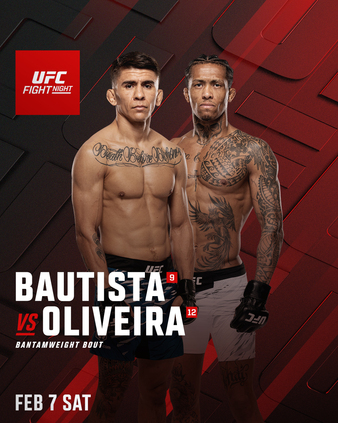
Explore Detailed Fighter Profiles
Click on either the fighter's name or profile image for each fighter to access comprehensive UFC statistics including striking metrics, grappling data, clinch performance, complete fight history, offensive & defensive analytics, and round-by-round breakdowns.

Muin Gafurov
Fighter Metrics
Victory Methods
Win Round Distribution
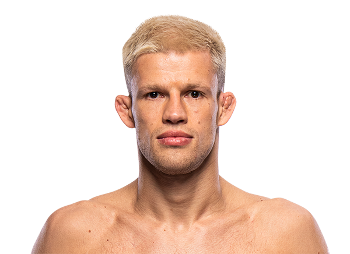
Jakub Wiklacz
Fighter Metrics
Victory Methods
Win Round Distribution
📋 Last 5 Fights - Muin Gafurov
| Date | Opponent | Result | Method |
|---|---|---|---|
| 2025-01-18 | Rinya Nakamura | W | Decision - Unanimous (R3, 5:00) |
| 2024-06-22 | Kyung Ho Kang | W | Decision - Unanimous (R3, 5:00) |
| 2023-10-21 | Said Nurmagomedov | L | Submission - Guillotine Choke (R1, 1:13) |
| 2023-06-03 | John Castañeda | L | Decision - Unanimous (R3, 5:00) |
| 2022-10-14 | Diego Silva | W | KO/TKO - Kick (R3, 0:23) |
📋 Last 5 Fights - Jakub Wiklacz
| Date | Opponent | Result | Method |
|---|---|---|---|
| 2025-10-04 | Patchy Mix | W | Decision - Unanimous (R3, 5:00) |
| 2024-06-07 | Sebastian Przybysz | W | Submission - Guillotine Choke (R2, 3:15) |
| 2024-03-16 | Zuriko Jojua | W | Decision - Unanimous (R5, 5:00) |
| 2023-09-16 | Sebastian Przybysz | D | Decision - Unanimous (, ) |
| 2022-12-17 | Sebastian Przybysz | W | Decision - Unanimous (R5, 5:00) |
Technical Analysis
Technical Score
Cardio Score
Overall Rating
📊 Technical Score
Calculated as the average of Striking Composite (66.0 vs 66.0) and Grappling Composite (78.0 vs 55.0). Balances overall striking effectiveness with grappling ability to measure complete technical skills.
💪 Cardio Score
Based on average fight duration, striking rate per minute, takedown rate, and finish rate. Measures cardiovascular endurance and ability to maintain pace throughout fights.
🎯 Overall Rating
Simple average of Technical Score and Cardio Score. Provides a holistic view of fighter capabilities combining skill level with physical conditioning and fight performance.
Striking Composite
Grappling Composite
Technical Radar Comparison
Visual comparison of key performance metrics between both fighters
📊 Detailed Statistical Comparison
🥊 Fight Analysis Breakdown
🧩 Muin Gafurov Key Advantages
The massive 42-percentage-point gap in takedown defense (70% vs 28%) is the most decisive differential in this matchup. Gafurov's ability to sprawl and maintain the fight on the feet, where he holds advantages in defense and timing, directly counters Wiklacz's submission-hunting approach. This forces Jakub into prolonged striking exchanges where his 36% strike defense becomes a liability. Gafurov's sambo background provides natural scrambling ability that keeps him safe even when entries occur.
Gafurov's 52% striking defense compared to Wiklacz's 36% means he'll consistently land cleaner shots while minimizing damage absorbed. In a 30-foot cage where space allows for better defensive movement, this defensive efficiency becomes even more pronounced. The 16-point gap translates to Gafurov winning the visual damage battle, which judges reward heavily in close rounds. His ability to exit exchanges cleanly after landing keeps him fresh for takedown defense.
Gafurov's recent UFC evolution shows a fighter who has learned to manage risk while maintaining offensive output. His last two unanimous decision victories over Nakamura and Kang demonstrate his ability to win rounds through controlled striking and measured grappling exchanges. This patient, points-oriented approach is ideal for neutralizing Wiklacz's all-or-nothing submission game. The 30-foot cage gives Gafurov extra space to work his low kicks and jab without getting cornered.
⚠️ Unfavorable Scenarios
Gafurov's only submission loss in the UFC came via guillotine choke to Said Nurmagomedov, exposing a specific defensive gap. If he enters takedowns with his head positioned on centerline or leaves his neck exposed during clinch exchanges, Wiklacz's 3.0 submission attempts per 15 minutes become extremely dangerous. The Polish fighter's high success rate with front headlock positions (59% of his wins via submission) means any scramble where Gafurov's head is forward could end the fight instantly.
If Gafurov grows frustrated by Wiklacz's reach advantage (70" vs 68") and begins forcing entries without proper setups, he risks walking into the submission traps. The 30-foot cage can work against him if he chases recklessly—more space means Wiklacz can create angles to bait overcommitted strikes, then counter with clinch entries into guillotine or front headlock positions. Patience is critical for Gafurov; any lapse into aggressive, linear pressure could be his undoing.
📋 Likely Gameplan
Gafurov should establish his offense through low kicks and jabs to touch Wiklacz without committing to dangerous exchanges. The 30-foot cage provides ample space for Gafurov to circle, reset, and maintain this outside striking game. By keeping Wiklacz at the end of his punches and avoiding prolonged clinch situations, Gafurov minimizes submission exposure while accumulating volume. His sambo background gives him the footwork to cut angles after landing, preventing Wiklacz from establishing forward pressure or trapping him against the cage.
When opportunities arise for brief takedowns or body lock positions, Gafurov should execute them quickly and exit cleanly rather than prolonged grappling exchanges. His 70% takedown defense means he can stuff Wiklacz's reactive attempts, and his 1.47 TD/15min rate suggests he can score positional control without over-committing. The key is avoiding scrambles where his neck is exposed—clean entries with proper head position, score the takedown or control time, then disengage before Wiklacz can establish his front headlock game. This hit-and-run grappling accumulates points while managing risk.
Gafurov's recent decision wins demonstrate his ability to control the pace and win rounds through consistent output rather than hunting finishes. He should focus on winning each three-minute segment through cleaner striking (aided by his 52% defense vs Wiklacz's 36%), occasional takedowns, and cage generalship. The 30-foot cage allows him to dictate range and avoid desperate exchanges. By maintaining this disciplined, points-oriented approach, Gafurov forces Wiklacz into taking risks that could expose him to counters while Gafurov safely banks rounds and controls the narrative for judges.
🚀 Jakub Wiklacz Key Advantages
Wiklacz's 3.0 submission attempts per 15 minutes combined with 59% of his career wins via submission creates a constant finishing threat that can flip the fight in one scramble. His specialty in front headlock positions (guillotine chokes) directly targets Gafurov's proven weakness—he was submitted via guillotine by Nurmagomedov. Wiklacz doesn't need traditional wrestling takedowns; he hunts for necks in transitions, scrambles, and clinch exchanges. This means every grappling exchange carries high-leverage danger for Gafurov, forcing him into hyper-defensive mode that limits his own offensive grappling.
Wiklacz's 55% striking accuracy compared to Gafurov's 45% means when both fighters throw, Jakub lands more cleanly. His 2-inch reach advantage (70" vs 68") and 1-inch height advantage (5'8" vs 5'7") give him natural tools to control range and pick his shots. The Polish fighter's precision striking can score points and set up his true weapon—forcing reactions that create submission opportunities. His accuracy also means he can be economical with output while still landing meaningful strikes, conserving energy for longer rounds.
Wiklacz has fought multiple 5-round title fights outside the UFC, demonstrating proven cardio in extended bouts. His 11:45 average fight duration suggests he's comfortable in longer exchanges and doesn't fade late. This experience gives him a mental and physical edge in deep waters—if the fight reaches the third round on competitive terms, Wiklacz has been there before. His submission-focused style is also less cardio-intensive than high-volume striking, allowing him to maintain threat levels throughout the full 15 minutes while waiting for the one opening he needs.
⚠️ Unfavorable Scenarios
If Gafurov successfully keeps the fight at kicking range and avoids prolonged grappling, Wiklacz's 36% strike defense becomes a massive liability. The 16-point gap in defensive efficiency means Wiklacz will absorb significant damage over three rounds of clean striking exchanges. The 30-foot cage makes it harder for Wiklacz to close distance and initiate his submission game, giving Gafurov endless space to circle, reset, and pick him apart. Without takedowns or clinch entries, Wiklacz has no path to victory via decision—he'll simply lose a striking match.
Wiklacz's 28% takedown defense means if Gafurov times his entries well, he can score takedowns that put Jakub in bad positions. If Wiklacz burns energy attempting submissions that don't finish, he concedes top position and control time to a fighter with 70% TD defense who is difficult to sweep or submit. Failed guillotine attempts leave Wiklacz exhausted in guard or conceding scrambles back to the feet, where Gafurov's superior strike defense allows him to win exchanges. This creates a negative spiral where Wiklacz's one weapon becomes his downfall.
If Wiklacz cannot secure submissions, his path to a decision win is extremely narrow. Gafurov's recent form shows a fighter comfortable winning rounds through controlled striking and occasional takedowns. The Russian's superior strike defense (52% vs 36%) and better takedown defense (70% vs 28%) mean he'll win the visual battle on scorecards. Wiklacz's submission-hunting style doesn't score well with judges unless finishes occur—failed attempts look like desperation, not dominance. Without a finish, Wiklacz loses a clear 29-28 or 30-27 decision.
📋 Likely Gameplan
Wiklacz must use his 4-inch reach advantage and superior striking accuracy (55% vs 45%) to force Gafurov into defensive reactions that create submission openings. His jab and straight punches should establish distance while baiting Gafurov into over-committing on counters or entries. The goal isn't to win a pure striking match—it's to create the chaos and timing windows where neck exposure occurs. By mixing feints with real shots, Wiklacz can trigger Gafurov's takedown attempts, which become opportunities for guillotine or front headlock counters.
Every clinch exchange, scramble, or transition should be treated as a submission opportunity for Wiklacz. His 3.0 sub attempts per 15 minutes need to spike even higher in this fight—he must be relentless in chasing the front headlock position whenever Gafurov's posture breaks. Whether it's a sprawl counter to a takedown attempt, a clinch break, or a scramble back to feet, Wiklacz needs to latch onto the neck and squeeze. Gafurov's proven vulnerability to guillotines means even a 30% success rate on 10+ attempts could end the fight.
Wiklacz cannot win a safe, technical decision against Gafurov's superior defense and recent point-fighting form. He must accept that his path to victory requires taking risks: initiating clinches despite inferior takedown defense, pursuing submissions even when conceding position, and pressing forward despite absorbing strikes. His 5-round experience and proven finishing ability give him the tools, but he needs to unleash them aggressively. The Polish fighter's best scenario is a chaotic, scramble-heavy fight where one mistake from Gafurov ends in a tap. Playing it safe guarantees a loss.
🎯 Fight Prediction Analysis
Data-driven prediction model based on statistical analysis
📊Detailed Analysis Summary
🏟️Cage Dynamics
The 30-foot octagon (large cage) plays a decisive role in this matchup, strongly favoring Gafurov's patient, point-fighting approach. With extra space to circle and reset after landing strikes, Gafurov can effectively utilize his low kick and jab game without getting cornered where Wiklacz could force clinch exchanges. The larger cage makes it more difficult for Wiklacz to trap Gafurov and initiate scrambles where his submission threats thrive. Gafurov's footwork and sambo background give him the tools to control distance and dictate when and where grappling occurs, negating Wiklacz's ability to create chaos.
🎯Technical Breakdown
The statistical differentials paint a clear picture: takedown defense (70% vs 28%) and strike defense (52% vs 36%) represent the two rails this fight runs on. Gafurov's ability to stuff Wiklacz's entries keeps the fight standing, where his defensive advantage ensures he wins the damage economy. Wiklacz's superior striking accuracy (55% vs 45%) is rendered moot when his 36% defense means he absorbs more cumulative damage. The submission threat (3.0 Sub/15) is real and dangerous, but Gafurov's experience with guillotine defense and improved positional awareness since the Nurmagomedov loss suggest he's learned from that failure. These stat profiles favor a clean striking bout with occasional Gafurov takedowns, exactly the type of fight that leads to his decision victories.
🧩Key Battle Areas
Three critical battle areas will determine the outcome: neck safety in scrambles, striking defense efficiency, and takedown stuffs. Gafurov must avoid putting his head on centerline during any entries and keep his chin tucked in clinches—one mistake creates Wiklacz's guillotine window. The striking exchanges will show Gafurov landing cleaner while absorbing less, banking rounds through volume and damage economy. Gafurov's 70% takedown defense against Wiklacz's 0.0 TD/15 suggests Wiklacz won't score traditional takedowns, forcing him into desperation clinches that Gafurov can break or use to score his own brief takedowns. The Bantamweight division's pace and 3-round duration favor Gafurov's cardio score (45) over longer bouts where Wiklacz's championship experience (55 cardio) would matter more.
🏁Final Prediction
The most likely outcome is Muin Gafurov by Decision (40% probability), achieved through disciplined range striking, superior defensive efficiency, and occasional takedowns to score control time. Gafurov's KO/TKO path (22%) emerges if his low kicks and body work accumulate damage over three rounds, potentially finishing a defensively porous Wiklacz late. Wiklacz's primary threat is Submission (18%), specifically the guillotine in scrambles or transitions—his 59% finish rate via submission creates real danger despite being the statistical underdog. The Polish fighter's decision path (9%) is narrow, requiring him to land significantly cleaner strikes while avoiding the takedowns and control time that judges reward. The 30-foot cage, defensive differentials, and Gafurov's recent form all point toward a clear Gafurov decision or late finish.
💰 Betting Analysis: Model vs Market
Detailed value assessment in the betting market
📊Market Odds
🤖Analytical Model
💎Value Opportunities
MAXIMUM VALUE
Model: 40% | Fair Odds: +150
GOOD VALUE
Model: 18% | Fair Odds: +456
SLIGHT VALUE
Model: 62% | Fair Odds: -163
⚠️Key Market Discrepancies
- • Undervalues defensive differentials – 70% TDDef vs 28% and 52% StrDef vs 36% create decisive edges.
- • Overprices submission threat – Wiklacz's guillotine is real but requires specific setups Gafurov can avoid.
- • Big-cage bias – 30ft octagon favors Gafurov's footwork and range control more than markets price.
🎯 Comprehensive Probabilistic Analysis
100 hypothetical fight simulation based on statistical data
🏆Outcome Distribution - Muin Gafurov
Primary path via fence control and rides
Late finish via accumulated striking damage
Control time leads to choke opportunities
💥Outcome Distribution - Jakub Wiklacz
Primary path via guillotine in scrambles
Requires clean striking with defensive improvements
Zero finishing power historically
⏰Fight Timeline Analysis
⚡Window of Opportunity - Jakub Wiklacz
- • All 15 minutes: Every scramble is guillotine opportunity.
- • Force chaos: Clinch pressure creates neck openings.
- • Acceptance of risk: Must press for finish, not points.
🎯Progressive Dominance - Muin Gafurov
- • Range control: Low kicks + jab to accumulate volume.
- • Defensive edge: Superior defense wins exchanges cleanly.
- • Round banking: Disciplined pace scores consistent rounds.
🎯 Final Confidence Assessment
Confidence level and uncertainty factors
Confidence Level
Strong defensive edges with submission threat variable
✅Supporting Factors
- • Massive TD defense edge (70% vs 28%)
- • Superior strike defense (52% vs 36%)
- • 30ft cage favors footwork and range control
- • Recent form shows disciplined point-fighting
⚠️Risk Factors
- • Wiklacz's guillotine threat is legitimate
- • Previous loss via guillotine shows vulnerability
- • Small UFC sample for both creates uncertainty
🏁Executive Summary
Muin Gafurov's superior defensive metrics and disciplined recent form position him as a clear favorite in this bantamweight matchup. The 30-foot octagon amplifies his advantages by providing ample space for his footwork and range control, making it difficult for Wiklacz to force the chaotic scrambles where his submission game thrives. Gafurov's 70% takedown defense compared to Wiklacz's 28% is the most decisive differential—it keeps the fight standing where Gafurov's 52% strike defense vs Wiklacz's 36% creates a damage economy heavily in his favor. While Wiklacz's 3.0 submission attempts per 15 minutes and 59% career finish rate via submission represent a genuine finishing threat, Gafurov's improved positional awareness since his guillotine loss to Nurmagomedov suggests he has learned from that failure. The Russian's last two UFC fights—both unanimous decision victories over quality opposition—demonstrate his ability to execute patient, risk-managed gameplans that bank rounds through consistent output and defensive efficiency.
Prediction: Gafurov by Decision most likely (40% probability) through disciplined range striking and superior defensive efficiency; Wiklacz's upset lane is Submission (18%) via guillotine in scrambles or transitions when Gafurov's neck positioning lapses. The fight's outcome hinges on whether Gafurov can maintain his defensive discipline and avoid the submission traps that represent Wiklacz's primary—and perhaps only—path to victory in this matchup.