

Sean O'Malley vs Yadong Song
Men's Bantamweight • UFC 324
Saturday, January 24, 2026 • T-Mobile Arena • 30ft Octagon (Large Cage)

Explore Detailed Fighter Profiles
Click on either the fighter's name or profile image for each fighter to access comprehensive UFC statistics including striking metrics, grappling data, clinch performance, complete fight history, offensive & defensive analytics, and round-by-round breakdowns.
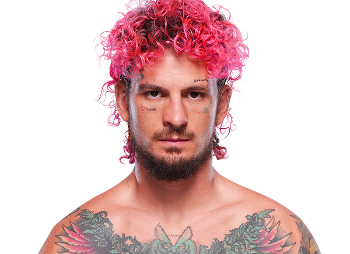
Sean O'Malley
Fighter Metrics
Victory Methods
Win Round Distribution
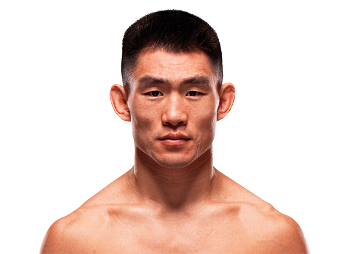
Yadong Song
Fighter Metrics
Victory Methods
Win Round Distribution
📋 Last 5 Fights - Sean O'Malley
| Date | Opponent | Result | Method |
|---|---|---|---|
| 2025-06-07 | Merab Dvalishvili | L | Submission - Arm Triangle (R3, 3:42) |
| 2024-09-14 | Merab Dvalishvili | L | Decision - Unanimous (R5, 5:00) |
| 2024-03-09 | Marlon Vera | W | Decision - Unanimous (R5, 5:00) |
| 2023-08-19 | Aljamain Sterling | W | TKO - Punches (R2, 2:04) |
| 2022-10-22 | Petr Yan | W | Decision - Split (R3, 5:00) |
📋 Last 5 Fights - Yadong Song
| Date | Opponent | Result | Method |
|---|---|---|---|
| 2025-02-22 | Henry Cejudo | W | Decision - Technical (R3, 5:00) |
| 2024-03-09 | Petr Yan | L | Decision - Unanimous (R3, 5:00) |
| 2023-12-09 | Chris Gutiérrez | W | Decision - Unanimous (R5, 5:00) |
| 2023-04-29 | Ricky Simón | W | TKO - Punches (R5, 0:34) |
| 2022-03-12 | Marlon Moraes | W | TKO - Punches (R1, 1:07) |
Technical Analysis
Technical Score
Cardio Score
Overall Rating
📊 Technical Score
Calculated as the average of Striking Composite (68.0 vs 54.0) and Grappling Composite (38.0 vs 41.0). Balances overall striking effectiveness with grappling ability to measure complete technical skills.
💪 Cardio Score
Based on average fight duration, striking rate per minute, takedown rate, and finish rate. Measures cardiovascular endurance and ability to maintain pace throughout fights.
🎯 Overall Rating
Simple average of Technical Score and Cardio Score. Provides a holistic view of fighter capabilities combining skill level with physical conditioning and fight performance.
Striking Composite
Grappling Composite
📊 Technical Radar Comparison
📊 Metrics Legend
📊 Detailed Statistical Comparison
🥊 Fight Analysis Breakdown
🧩 Sean O'Malley Key Advantages
O'Malley's +3" height and +5" reach advantage in a large cage heavily favors his "sniper" style at distance. With 6.30 SLpM and 61% accuracy, he can pick apart Song from range while maintaining defensive positioning. The 30-foot octagon provides ample space for his lateral movement, feints, and constant stance switches that make him difficult to read and corner. This physical advantage becomes exponentially more significant when combined with O'Malley's elite footwork and ability to create angles. Song's compact frame means he must cover significantly more ground to enter his preferred boxing range, during which O'Malley can land multiple clean shots. The Montana native's understanding of distance management—honed through fights against strikers like Petr Yan and Marlon Vera—allows him to control the pace and positioning. His ability to maintain this range while still landing significant volume creates a scoring framework that judges consistently reward, especially when combined with his superior accuracy that ensures clean connections register more effectively than Song's higher miss rate.
O'Malley's 61% striking accuracy combined with 6.30 SLpM represents championship-level output—not merely high volume. Song's 44% accuracy means he'll miss significantly more while trying to close distance. Sean's timing on counters (the Sterling KO exemplifies this perfectly) and his ability to land clean shots while moving makes him exceptionally difficult to outpoint in a technical striking match. This precision differential compounds over three rounds—while Song may throw similar volume in bursts, O'Malley's higher connection rate means he accumulates damage more efficiently. The former champion's ability to land clean shots while maintaining defensive positioning creates a scoring advantage that becomes visually apparent to judges. His counter-striking ability—demonstrated in finishes against Aljamain Sterling and multiple other opponents—means he can capitalize on Song's aggressive entries with fight-altering shots. The statistical gap between 61% and 44% accuracy represents a fundamental difference in technical proficiency that manifests in cleaner connections, better damage accumulation, and superior scoring optics throughout the fight.
O'Malley's 60% striking defense and 3.48 SApM indicate he's more difficult to hit consistently than Song (56% defense, 4.00 SApM). His ability to make opponents miss through head movement, footwork, and angles minimizes damage accumulation while creating counter opportunities. This defensive efficiency compounds over three rounds. The 0.52 SApM differential may seem small, but over a three-round fight, this translates to approximately 2-3 fewer significant strikes absorbed per round. O'Malley's defensive shell—characterized by subtle head movement, shoulder rolls, and angle exits—makes him exceptionally difficult to hit cleanly. His ability to slip punches while maintaining offensive output creates a frustrating dynamic for opponents who must commit fully to attacks, leaving themselves exposed to counters. Song's higher absorption rate (4.00 SApM) suggests he's more willing to exchange in the pocket, but this approach becomes problematic against a counter-striker of O'Malley's caliber. The defensive gap becomes particularly significant in later rounds when accumulated damage begins to affect performance, and O'Malley's cleaner defensive record allows him to maintain higher output while Song potentially slows from damage accumulation.
⚠️ Unfavorable Scenarios
If Song manages to close the cage and force extended exchanges in the pocket where his reach disadvantage is minimized, his heavy hooks and uppercuts become dangerous. O'Malley's reach advantage dissolves in close quarters, and Song's compact power punching can shift momentum with single shots. The Chinese fighter's knockout power—demonstrated in finishes of Marlon Moraes (R1) and Ricky Simón (R5)—becomes exponentially more dangerous when he can unload his full arsenal without covering distance. Song's compact frame generates significant power in short hooks and uppercuts, particularly his right hand that has produced multiple finishes. If he successfully traps O'Malley against the fence and forces extended exchanges, his power advantage can overcome technical deficits. However, this scenario requires Song to successfully cut off the cage—a challenging proposition against O'Malley's elite footwork and movement. The risk increases if O'Malley becomes complacent or fatigued, allowing Song to establish pocket position where his power becomes most effective. Song's ability to generate fight-ending power in close quarters represents his primary path to victory, but it requires overcoming O'Malley's distance control and defensive movement.
While Song isn't a high-volume wrestler (0.61 TD15), his 74% takedown defense suggests he understands grappling exchanges. If Song mixes in takedown attempts to disrupt O'Malley's rhythm, Sean's 61% TDDef could be tested—particularly after his struggles against Merab's relentless pressure wrestling. O'Malley's defensive grappling has been exposed against elite wrestlers, most notably in his two losses to Merab Dvalishvili where he struggled with chain wrestling sequences and pressure. While Song doesn't possess Merab's wrestling volume, his occasional takedown attempts could disrupt O'Malley's striking rhythm and force him to defend rather than attack. Song's 74% takedown defense indicates he understands defensive grappling fundamentals, but his offensive wrestling (0.61 TD15, 38% accuracy) suggests limited threat. However, even failed takedown attempts can create clinch situations where Song's power becomes more dangerous. If Song successfully mixes wrestling with his striking attacks, he could force O'Malley into uncomfortable positions where his technical advantages diminish. The key question is whether Song can execute this strategy effectively while maintaining his striking pressure—a challenging balance that requires significant energy expenditure.
📋 Likely Gameplan
O'Malley should maintain the fight at his preferred distance, using his jab, straight punches, and front kicks to keep Song at the end of his reach. By forcing Song to close distance repeatedly, Sean can time counter shots as the Chinese fighter enters—particularly the straight right that's produced multiple KOs in his career. The jab becomes O'Malley's primary weapon for distance control—not just for scoring, but for disrupting Song's rhythm and preventing him from establishing his own pace. His straight right hand, which has produced finishes against Aljamain Sterling and multiple other opponents, represents his most dangerous counter weapon. By maintaining range and forcing Song to commit to entries, O'Malley can time these counters with devastating effect. Front kicks to crucial for maintaining distance and disrupting Song's forward pressure—they serve both offensive and defensive purposes by keeping Song at bay while potentially damaging his lead leg. O'Malley's ability to mix these weapons while maintaining constant movement creates a frustrating dynamic for Song, who must expend significant energy simply to close distance. The key is consistency—O'Malley must avoid becoming complacent or allowing Song to establish pocket position where his power advantage becomes significant.
Attack Song's lead leg to limit his explosive entry ability. Lateral movement and angle creation will be crucial—O'Malley should avoid backing straight to the fence where Song can cut off the cage. Consistent repositioning forces Song to reset his approach repeatedly. Leg kicks serve multiple purposes in this matchup: they damage Song's base, limit his explosive entries, and create openings for O'Malley's hand combinations. By targeting Song's lead leg consistently, O'Malley can reduce his opponent's mobility and make it more difficult for him to close distance effectively. Lateral movement is essential—if O'Malley backs straight to the fence, Song can cut off angles and force exchanges in his preferred range. Instead, O'Malley should use circular movement and angle creation to maintain space while keeping Song guessing about his positioning. This constant repositioning forces Song to reset his approach repeatedly, draining energy and preventing him from establishing rhythm. O'Malley's footwork advantage—demonstrated throughout his career—allows him to control space effectively while maintaining offensive output. The key is avoiding the trap of becoming stationary or allowing Song to corner him, which would neutralize his primary advantages.
🚀 Yadong Song Key Advantages
Song has demonstrated significant knockout power with 9 KO/TKO victories, including finishes of Moraes (R1) and Simón (R5). His compact boxing—hooks, uppercuts, and short punches—becomes extremely dangerous in close quarters where O'Malley's reach advantage is neutralized. If Song can close the distance and force exchanges, single shots can shift the fight's trajectory. Song's power is legitimate and fight-altering—his ability to generate significant force in compact punches makes him dangerous even when out-techniqued. The Chinese fighter's knockout of Marlon Moraes in just 67 seconds demonstrates his ability to end fights quickly when he connects cleanly. His TKO finish of Ricky Simón in the fifth round shows he maintains power late in fights, making him dangerous throughout all three rounds. Song's compact frame allows him to generate significant torque in hooks and uppercuts, particularly his right hand that has produced multiple finishes. When he successfully enters the pocket, his power advantage becomes significant—O'Malley's technical superiority matters less if Song can land one clean power shot. The key is Song's ability to close distance effectively and force exchanges where his power can overcome technical deficits. His aggressive boxing style, combined with legitimate knockout power, creates a path to victory that doesn't require out-techniquing O'Malley—simply landing clean power shots in close quarters can shift momentum dramatically.
Song's 74% takedown defense is significantly better than O'Malley's 61%, suggesting he can maintain the fight standing where his power is most effective. This defensive capability means Song can focus on closing distance without fear of being taken down, allowing him to commit fully to his aggressive boxing approach when he does get inside. This defensive advantage is significant—Song's ability to stuff takedowns means he can commit fully to his striking attacks without worrying about being taken down and controlled. His 74% defense rate indicates strong fundamentals in sprawl technique and defensive positioning, allowing him to maintain the fight in his preferred range. This becomes particularly important when Song is pressuring forward—he can commit to aggressive entries knowing he can defend against takedown attempts. O'Malley's lower takedown defense (61%) suggests he's more vulnerable to being taken down, though he's unlikely to initiate wrestling exchanges himself. Song's superior defensive grappling means he can focus entirely on closing distance and landing power shots without the defensive concerns that might limit O'Malley's aggression. This allows Song to be more aggressive in his entries, knowing he can defend against takedown attempts while maintaining his offensive pressure.
⚠️ Unfavorable Scenarios
If Song cannot consistently close the distance and the fight stays at range, O'Malley's 6.30 SLpM volume and 61% accuracy will dominate the exchanges. Chasing O'Malley in a straight line across the 30-foot cage becomes a "moving target" scenario where Song accumulates damage while struggling to land his power shots. This scenario represents Song's worst-case outcome—if he cannot effectively cut the cage and force exchanges, O'Malley's technical advantages become overwhelming. The 30-foot octagon provides O'Malley multiple escape routes, making it extremely difficult for Song to trap him against the fence. Chasing O'Malley in a straight line allows the former champion to land clean shots while retreating, creating a frustrating dynamic where Song expends energy without landing significant offense. O'Malley's superior footwork and movement mean he can maintain distance while still landing volume, creating a scoring framework that heavily favors him. Song's lower accuracy (44%) means he'll miss more shots while chasing, further compounding the problem. This scenario becomes increasingly likely if O'Malley establishes early control and Song becomes frustrated or fatigued from chasing. The key for Song is avoiding this scenario entirely by cutting the cage effectively and forcing exchanges on his terms rather than chasing O'Malley across the octagon.
If the fight becomes a technical point-fighting battle over three rounds, Song's 44% accuracy against O'Malley's 61% creates a significant scoring disadvantage. Without forcing exchanges on his terms or mixing in wrestling to disrupt rhythm, Song will likely lose a clear decision on volume and accuracy. This scenario heavily favors O'Malley's technical superiority—his higher accuracy and volume mean he'll land more clean shots consistently throughout the fight. Song's lower accuracy (44%) means he'll miss significantly more shots, creating a scoring deficit that becomes difficult to overcome. Without forcing exchanges in the pocket or mixing in wrestling to disrupt O'Malley's rhythm, Song becomes a target for O'Malley's precision striking. The former champion's ability to land clean shots while maintaining defensive positioning creates a scoring framework that judges consistently reward. Song's path to victory requires avoiding this scenario entirely—he must force exchanges on his terms where his power can overcome technical deficits. Point-fighting favors the more technical striker, and O'Malley's superior accuracy and volume make him the clear favorite in this type of fight. Song's best chance lies in making the fight chaotic and aggressive rather than technical and measured.
📋 Likely Gameplan
Song should prioritize cutting the cage rather than chasing— lateral steps to corner O'Malley against the fence where his movement options diminish. Constant forward pressure forces Sean to retreat and disrupts his rhythm. Body attacks early to slow O'Malley's footwork and limit his volume in later rounds. Cage cutting is essential for Song—he cannot afford to chase O'Malley in a straight line across the 30-foot octagon. Instead, he must use lateral movement and angle cutting to corner O'Malley against the fence where escape routes diminish. This requires constant forward pressure combined with intelligent positioning that prevents O'Malley from circling out. Body attacks serve multiple purposes: they slow O'Malley's footwork, drain his energy, and create openings for head shots. By targeting the body consistently, Song can reduce O'Malley's mobility and make it more difficult for him to maintain distance. The key is maintaining pressure without becoming predictable—Song must vary his attacks between body and head while constantly cutting off angles. His forward pressure disrupts O'Malley's rhythm and prevents him from establishing his preferred range. However, this strategy requires significant energy expenditure, and Song must balance aggression with sustainability over three rounds.
Song's best chance involves increasing aggression in R2-R3. If he point-fights with O'Malley, statistics heavily favor the American. Mixing boxing with clinch entries and occasional takedown attempts can break Sean's rhythm. Song needs to make this uncomfortable and chaotic rather than technical. The middle rounds represent Song's best window—O'Malley may be more willing to exchange after establishing early control, and Song's power becomes more dangerous as damage accumulates. By increasing aggression in R2-R3, Song can capitalize on potential openings while O'Malley may become complacent or fatigued. Mixing boxing with clinch entries creates a chaotic dynamic that disrupts O'Malley's technical advantages. Occasional takedown attempts, even if unsuccessful, force O'Malley to defend and disrupt his striking rhythm. The key is making the fight uncomfortable and unpredictable rather than allowing O'Malley to settle into his preferred technical pace. Song's power advantage becomes most significant in these chaotic exchanges where technical superiority matters less than landing clean power shots. He must avoid the trap of point-fighting, which heavily favors O'Malley's superior accuracy and volume. Instead, Song needs to force aggressive exchanges where his power can overcome technical deficits.
🎯 Fight Prediction Analysis
Data-driven prediction model based on statistical analysis
📊Detailed Analysis Summary
🏟️Cage Dynamics
The 30-foot octagon strongly favors O'Malley's distance fighting style. His +3" height and +5" reach advantage combined with elite footwork allows him to control space and pick his shots. Song will need to cover significant ground to enter his preferred boxing range—a challenge compounded by O'Malley's constant movement and angle creation. The large cage provides O'Malley multiple escape routes when pressured, making it difficult for Song to trap him against the fence for extended periods. This spatial advantage becomes exponentially more significant when combined with O'Malley's understanding of distance management. The Montana native's ability to maintain his preferred range while still landing significant volume creates a frustrating dynamic for opponents who must expend energy simply to close distance. Song's compact frame means he must cover approximately 5-7 feet more ground than O'Malley to enter his preferred range, during which O'Malley can land multiple clean shots. The large cage's dimensions provide O'Malley multiple escape routes—he can circle out, angle off, or reset to center when pressured. This spatial control becomes particularly important in later rounds when Song's energy begins to deplete from chasing, and O'Malley can maintain his technical advantages more easily. The cage dynamics fundamentally favor the longer, more mobile striker, creating a structural advantage that compounds throughout the fight.
🎯Technical Breakdown
The striking differential heavily favors O'Malley: 6.30 vs 4.58 SLpM represents a 37.5% volume advantage, while 61% vs 44% accuracy means Sean lands clean at a significantly higher rate. O'Malley's 3.48 SApM vs Song's 4.00 indicates better defensive efficiency. While Song possesses legitimate knockout power (9 KO/TKOs), his lower accuracy and reach disadvantage make consistent connection challenging. The fight likely becomes a volume/precision battle that statistically favors the former champion. This statistical gap represents a fundamental difference in technical proficiency that manifests throughout the fight. O'Malley's 6.30 SLpM output, combined with 61% accuracy, means he lands approximately 3.84 significant strikes per minute compared to Song's 2.02 (4.58 SLpM × 44% accuracy). This 90% differential compounds over three rounds, creating a significant scoring advantage. O'Malley's superior defensive metrics (60% StrDef vs 56%, 3.48 SApM vs 4.00) mean he absorbs less damage while landing more, creating a damage economy that heavily favors him. Song's power advantage becomes less significant when he cannot connect consistently, and his lower accuracy means he'll miss significantly more shots while trying to close distance. The fight's statistical framework clearly favors O'Malley's technical superiority, though Song's power keeps him dangerous if he can force exchanges in his preferred range.
🧩Key Battle Areas
Three critical factors determine the outcome: distance management, early round momentum, and durability under pressure. O'Malley's ability to maintain his preferred range neutralizes Song's power advantage. However, Song's best path involves cutting the cage effectively, forcing exchanges in the pocket, and potentially mixing in wrestling to disrupt rhythm. O'Malley's recent struggles against Merab's pressure style suggest he can be pushed back and controlled—though Song's approach differs significantly from pure wrestling pressure. Distance management is the primary battlefield where this fight will be decided. O'Malley's success depends on maintaining his preferred range where his technical advantages become most significant. Song's success requires closing distance effectively and forcing exchanges where his power can overcome technical deficits. Early round momentum becomes crucial—if O'Malley establishes control early, he can dictate the pace and positioning throughout the fight. However, if Song can establish pressure and force exchanges in the first round, he can disrupt O'Malley's rhythm and create openings for power shots. Durability under pressure represents the third critical factor—both fighters have shown vulnerability when pressured, but O'Malley's recent losses to Merab suggest he can be pushed back and controlled. However, Song's pressure differs significantly from pure wrestling pressure, and O'Malley's superior defensive striking may allow him to handle Song's aggressive entries more effectively than he handled Merab's wrestling chains.
🏁Final Prediction
The most likely outcome is Sean O'Malley by KO/TKO (38% probability), achieved through accumulative damage at range with a potential counter finish as Song commits to closing distance. O'Malley by Decision (23%) represents the next most probable scenario—a clear volume victory over three rounds. Song's best path is KO/TKO (22%), requiring him to successfully close distance and land power shots in pocket exchanges. The statistical and stylistic advantages clearly favor O'Malley in a large cage, though Song's power keeps him dangerous throughout. O'Malley's KO/TKO path becomes viable through accumulated damage at range combined with counter-striking opportunities as Song commits to closing distance. His ability to land clean shots consistently while maintaining defensive positioning creates a damage accumulation that can lead to fight-ending sequences. The former champion's counter-striking ability—demonstrated in finishes against Aljamain Sterling and multiple other opponents—means he can capitalize on Song's aggressive entries with devastating effect. O'Malley's decision path requires maintaining technical control throughout three rounds, using his superior volume and accuracy to outscore Song consistently. Song's KO/TKO path represents his primary route to victory—he must successfully close distance and land power shots in pocket exchanges where his power advantage becomes significant. However, this requires overcoming O'Malley's distance control and defensive movement, making it a challenging proposition. The statistical framework clearly favors O'Malley, but Song's power keeps him dangerous if he can force exchanges in his preferred range.
💰 Betting Analysis: Model vs Market
Detailed value assessment in the betting market
📊Market Odds
🤖Analytical Model
💎Value Opportunities
MAXIMUM VALUE
Model: 38% | Fair: +163
GOOD VALUE
Model: 22% | Fair: +355
SLIGHT VALUE
Model: 60% | Fair: -150
⚠️Key Market Discrepancies
- • Finish rate undervalued – Both fighters have high KO power; finishes likely despite 5-round format.
- • Reach advantage significant – O'Malley's +5" in large cage historically decisive against shorter strikers.
- • Momentum factor – O'Malley coming off losses may affect confidence; Song riding momentum from Cejudo win.
🎯 Comprehensive Probabilistic Analysis
100 hypothetical fight simulation based on statistical data
🏆Outcome Distribution - Sean O'Malley
Primary path via counters and accumulated damage
Volume advantage over three rounds
Rare scenario following knockdown
💥Outcome Distribution - Yadong Song
Best path via pocket exchanges and power shots
Requires successful pressure and body work
Low historical submission profile
⏰Fight Timeline Analysis
⚡Window of Opportunity - Yadong Song
- • Middle rounds (R2-R3): Highest power shot connection probability.
- • Cage cutting: Must trap O'Malley against fence for exchanges.
- • Body work: Target midsection to slow Sean's movement.
🎯Accumulative Advantage - Sean O'Malley
- • Range control: Jab, cross, front kick to maintain distance.
- • Counter timing: Punish Song's entries with precision.
- • Late rounds: Volume and damage differential compounds.
🎯 Final Confidence Assessment
Confidence level and uncertainty factors
Confidence Level
Clear statistical edge via striking metrics and physical advantages
✅Supporting Factors
- • Significant reach and height advantage (+5", +3")
- • Superior volume and accuracy (6.30 vs 4.58 SLpM)
- • Large cage favors O'Malley's distance style
- • Better striking defense (60% vs 56%)
⚠️Risk Factors
- • O'Malley's recent 2-fight losing streak
- • Song's legitimate knockout power in close
- • Song's superior takedown defense (74%)
🏁Executive Summary
Sean O'Malley enters this bantamweight bout with clear statistical advantages in striking volume (6.30 vs 4.58 SLpM), accuracy (61% vs 44%), and physical dimensions (+5" reach, +3" height). The 30-foot octagon heavily favors his distance-fighting style, allowing him to utilize his range weapons while maintaining defensive positioning. Song Yadong's primary path to victory lies through closing distance and landing power shots in pocket exchanges— a challenging proposition against O'Malley's movement and counter-timing. These statistical advantages create a comprehensive framework that heavily favors O'Malley across multiple dimensions. His 6.30 SLpM output, combined with 61% accuracy, means he lands approximately 3.84 significant strikes per minute compared to Song's 2.02—a 90% advantage that compounds over three rounds. O'Malley's superior defensive metrics (60% StrDef vs 56%, 3.48 SApM vs 4.00) create a damage economy that heavily favors him, allowing him to accumulate offense while minimizing damage absorption. The physical advantages (+5" reach, +3" height) become exponentially more significant in the 30-foot octagon, where O'Malley can control space and maintain his preferred range more effectively. Song's path to victory requires overcoming these structural disadvantages through effective cage cutting, aggressive pressure, and landing power shots in close quarters where his technical deficits matter less. However, this approach requires significant energy expenditure and success in closing distance against an elite distance striker with superior movement and defensive capabilities.
Prediction: Sean O'Malley by KO/TKO is the most likely outcome (38% probability) through accumulated damage and counter strikes as Song attempts to close distance. O'Malley by Decision (23%) represents the secondary path via clear volume dominance over three rounds. Song's upset lane is KO/TKO (22%) via power shots in close—his best chance requires successfully cutting the cage and forcing brawls where his power advantage materializes. The fight's outcome hinges on whether Song can effectively close distance or whether O'Malley can maintain his preferred range throughout. O'Malley's KO/TKO path becomes viable through his ability to land clean shots consistently at range, accumulating damage that can lead to fight-ending sequences. His counter-striking ability—demonstrated throughout his career—means he can capitalize on Song's aggressive entries with devastating effect, particularly his straight right hand that has produced multiple finishes. The decision path requires O'Malley to maintain technical control throughout three rounds, using his superior volume and accuracy to outscore Song consistently. Song's upset lane requires him to successfully overcome O'Malley's distance control and defensive movement—a challenging proposition that becomes increasingly difficult as the fight progresses and O'Malley establishes control. The statistical and stylistic advantages clearly favor O'Malley, but Song's legitimate knockout power keeps him dangerous if he can force exchanges in his preferred range. The fight's outcome ultimately depends on whether Song can effectively close distance and land power shots, or whether O'Malley can maintain his preferred range and technical advantages throughout all three rounds.