

Justin Gaethje vs Paddy Pimblett
Men's Interim Lightweight Title Bout • UFC 324
Saturday, January 24, 2026 • 30ft Octagon (Large Cage)
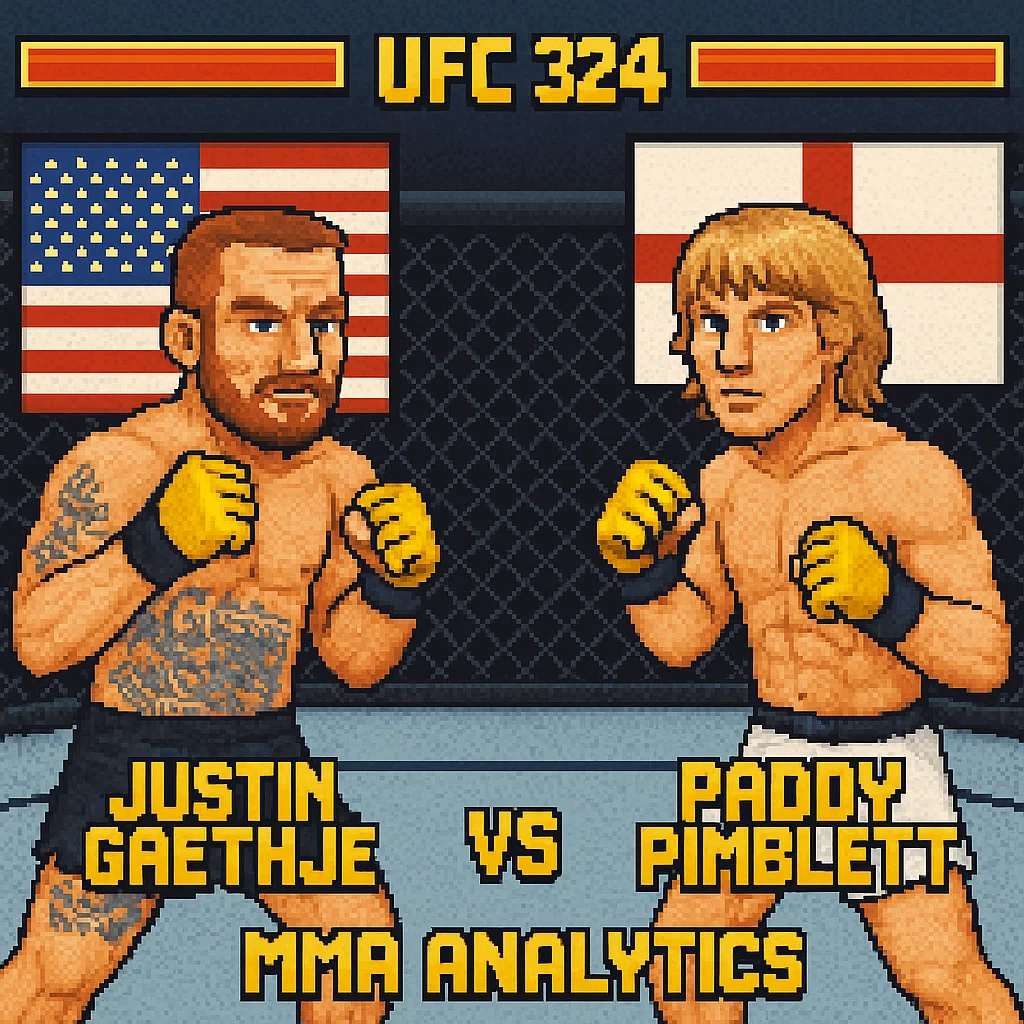
Explore Detailed Fighter Profiles
Click on either the fighter's name or profile image for each fighter to access comprehensive UFC statistics including striking metrics, grappling data, clinch performance, complete fight history, offensive & defensive analytics, and round-by-round breakdowns.
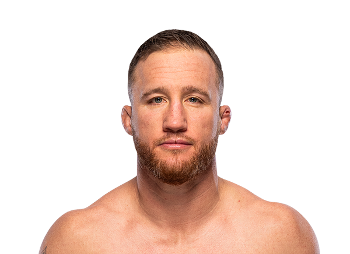
Justin Gaethje
Fighter Metrics
Victory Methods
Win Round Distribution
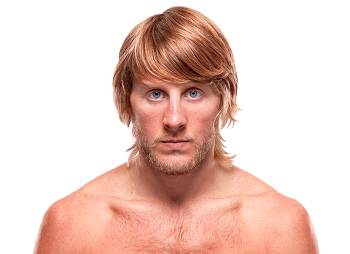
Paddy Pimblett
Fighter Metrics
Victory Methods
Win Round Distribution
📋 Last 5 Fights - Justin Gaethje
| Date | Opponent | Result | Method |
|---|---|---|---|
| 2025-03-08 | Rafael Fiziev | W | Decision - Unanimous (R3, 5:00) |
| 2024-04-13 | Max Holloway | L | KO - Punch (R5, 4:59) |
| 2023-07-29 | Dustin Poirier | W | TKO - Head Kick (R2, 1:00) |
| 2023-03-18 | Rafael Fiziev | W | Decision - Majority (R3, 5:00) |
| 2022-05-07 | Charles Oliveira | L | Submission - RNC (R1, 3:22) |
📋 Last 5 Fights - Paddy Pimblett
| Date | Opponent | Result | Method |
|---|---|---|---|
| 2025-04-12 | Michael Chandler | W | TKO - Punches (R1, 4:15) |
| 2024-07-27 | King Green | W | Submission - RNC (R1, 3:22) |
| 2023-12-16 | Tony Ferguson | W | Decision - Unanimous (R3, 5:00) |
| 2022-12-10 | Jared Gordon | W | Decision - Unanimous (R3, 5:00) |
| 2022-07-23 | Jordan Leavitt | W | Submission - RNC (R2, 2:46) |
Technical Analysis
Technical Score
Cardio Score
Overall Rating
📊 Technical Score
Balanced score (75 vs 75) reflecting opposite domains: Gaethje's elite striking volume and accuracy vs Pimblett's dangerous grappling and submission threat.
💪 Cardio Score
Gaethje's experience in 5-round wars and high output late in fights earns him a significant edge (83 vs 68) over Pimblett, who is unproven in deep waters.
🎯 Overall Rating
Gaethje leads overall (79 vs 71) due to his durability, strength of schedule, and proven ability to maintain elite performance against top-tier competition.
Striking Composite
Grappling Composite
📊 Technical Radar Comparison
📊 Metrics Legend
📊 Detailed Statistical Comparison
🥊 Fight Analysis Breakdown
🧩 Justin Gaethje Key Advantages
Gaethje's 6.59 significant strikes landed per minute represents one of the highest output rates in the lightweight division, creating a massive volume advantage against Paddy's porous defense (42% StrDef). This differential becomes even more pronounced when considering the quality of opposition—Gaethje has maintained this output against elite strikers like Dustin Poirier, Max Holloway, and Rafael Fiziev, while Pimblett's defensive metrics were built largely against non-elite competition. The statistical edge is clear: Gaethje lands 1.4 more strikes per minute while maintaining superior accuracy (59% vs 54%), meaning he's not just throwing more volume, but landing cleaner, more damaging shots. His proven ability to land volume against elite competition means he can likely find Paddy's chin often and early, especially given Paddy's tendency to keep his hands low and chin high. The combination of high volume, proven power, and superior accuracy creates a compounding advantage that becomes increasingly difficult for Pimblett to overcome as the fight progresses. Historical evidence shows that fighters who absorb Gaethje's volume typically struggle to maintain their gameplan, as the constant pressure and damage accumulation forces them into defensive shells or reckless exchanges.
Gaethje is historically very hard to hold down, with only elite grapplers like Khabib Nurmagomedov and Charles Oliveira successfully controlling and finishing him on the mat. His 68% takedown defense is particularly impressive given the caliber of wrestlers and grapplers he's faced throughout his career—opponents who actually shoot takedowns with intent, not just occasional attempts. Combined with his Division 1 wrestling background, Gaethje possesses exceptional defensive hips, balance, and the ability to explode back to his feet even when taken down. This directly neutralizes Paddy's best path to victory—grappling control and submission opportunities. While Pimblett averages 0.96 takedowns per 15 minutes with 29% accuracy, Gaethje's defensive skills mean Paddy will have to work significantly harder than usual to secure takedowns, and even if successful, Gaethje's ability to scramble and stand prevents Pimblett from establishing the extended control time necessary for his submission game. The wrestling base also allows Gaethje to dictate where the fight takes place, forcing Pimblett into his least favorable scenario—extended striking exchanges where Gaethje's volume and power become decisive factors.
Gaethje's calf kicks are legendary and have become his signature weapon, systematically breaking down opponents' mobility and base over the course of fights. His ability to land these kicks against both southpaw and orthodox stances makes him particularly dangerous, and his low-kick accuracy combined with his volume means opponents absorb significant damage to their lead leg early in fights. Against a fighter like Pimblett who relies heavily on movement, scrambles, and explosive entries for takedowns, compromised legs will severely limit his ability to execute his gameplan. As the fight progresses, damaged legs reduce Pimblett's ability to: (1) explode into takedown attempts with proper power and speed, (2) evade Gaethje's power shots and pressure, (3) maintain proper stance and balance for striking exchanges, and (4) generate the explosive movements necessary for his submission entries. Historical evidence shows that fighters who absorb significant leg kick damage against Gaethje—like Tony Ferguson and Michael Johnson—become increasingly stationary targets as fights progress, making them vulnerable to Gaethje's power shots and reducing their ability to implement their own gameplans effectively. The cumulative effect of leg kicks compounds over 25 minutes, creating a progressive advantage that becomes insurmountable in later rounds.
⚠️ Unfavorable Scenarios
Getting into extended scramble chains where technique breaks down and positional control becomes unpredictable. Paddy thrives in chaos and has demonstrated exceptional ability to capitalize on transitional moments—his submission victories often come from catching opponents in scrambles where they're momentarily vulnerable. If Gaethje gets sloppy with his ground-and-pound or over-aggressive in pursuing finishes, he could expose himself to Pimblett's opportunistic submission game. The danger is particularly acute when Gaethje drops Pimblett and follows him to the mat—while Gaethje's instinct is to finish with ground-and-pound, diving into Pimblett's guard or getting caught in a scramble creates windows for back-takes, front headlock attacks, or leg entanglements. Pimblett's ability to chain submissions from various positions means even brief moments of positional uncertainty can result in fight-ending sequences. Gaethje must balance aggression with discipline, avoiding the temptation to over-commit to ground finishes that could lead him into Pimblett's strongest domain where his BJJ black belt credentials and aggressive back-taking instincts become most dangerous.
Accumulated damage from years of wars—including brutal fights against Poirier, Ferguson, and Oliveira—combined with the devastating late-round KO loss to Max Holloway raises legitimate questions about Gaethje's long-term durability and chin resilience. While he's historically shown exceptional toughness, fighters with his style and fight history can experience rapid declines in durability, especially after significant knockout losses. The Holloway KO was particularly concerning because it came late in a fight where Gaethje was still competitive, suggesting his chin may no longer be the infinite resource it once was. A flash knockdown or moment of vulnerability could be catastrophic against Pimblett, who has shown the ability to capitalize on hurt opponents and transition to submissions. If Gaethje gets stunned or dropped, Pimblett's opportunistic grappling instincts could lead to a quick submission finish before Gaethje can recover or defend. This durability concern is compounded by Gaethje's high-volume, high-risk style—he's willing to eat shots to give them, which becomes increasingly dangerous as his chin potentially deteriorates and Pimblett's power shots become more effective.
📋 Likely Gameplan
Early heavy calf kicks targeting Paddy's lead leg to systematically break down his mobility and base. The strategy should focus on landing these kicks consistently in the first two rounds, as compromised legs will severely limit Pimblett's ability to execute explosive takedown attempts and maintain proper striking distance. Keep the fight in the center of the octagon where Gaethje can control distance and prevent Pimblett from using the fence for takedown setups. Implement a sprawl-and-brawl approach—when Pimblett shoots, sprawl hard, create separation, and return to striking range rather than engaging in extended clinch work. Avoid clinch stalling where Paddy can jump to the back or create scramble opportunities. The key is maintaining discipline: don't over-pursue ground-and-pound if Pimblett goes down, force him to stand rather than diving into his guard where submission threats increase exponentially. Use feints and level changes to keep Pimblett guessing, but prioritize staying upright and maintaining striking control where Gaethje's advantages are most pronounced.
If Paddy survives the early storm and the fight extends into the championship rounds, switch to a disciplined jab + low-kick rhythm designed to accumulate damage while minimizing risk. This approach leverages Gaethje's superior cardio and proven ability to maintain output over 25 minutes—his 11:14 average fight duration with multiple 5-round wars demonstrates exceptional cardiovascular conditioning. The disciplined approach becomes crucial because: (1) it prevents Gaethje from gassing himself out with wild exchanges, (2) it continues to chip away at Pimblett's legs and body, compounding damage over time, (3) it maintains scoring advantages while reducing opportunities for Pimblett to create chaos and submission windows, and (4) it allows Gaethje to pace himself for a potential late finish or clear decision victory. Avoid over-pursuing ground-and-pound to minimize submission risk—if Pimblett goes down, land a few shots to score, then force him to stand rather than diving into guard positions where his submission game becomes most dangerous. The goal is to win minutes consistently rather than chasing high-risk finishes that could backfire.
🚀 Paddy Pimblett Key Advantages
Paddy is the far superior submission grappler, with a 1.7 submission attempts per 15 minutes compared to Gaethje's essentially non-existent sub game (0.0 SubPer15). His ability to take the back in scrambles and finish with rear-naked chokes represents his clearest and most realistic path to victory. Pimblett's BJJ black belt credentials, combined with his aggressive back-taking instincts and chain-submission sequences, make him exceptionally dangerous whenever fights hit the mat or enter transitional phases. He needs just one mistake from Gaethje—a sloppy takedown attempt, an over-aggressive ground-and-pound sequence, or a moment of positional uncertainty in a scramble—to capitalize and end the fight. Historical evidence shows Pimblett's ability to finish submissions quickly once he secures dominant positions, as seen in his victories over Jordan Leavitt and King Green. The submission threat is particularly acute in early rounds when Pimblett is fresh and explosive, making his entries more dangerous and his transitions faster. While Gaethje's takedown defense is strong, even elite defenders can be caught in scrambles, and Pimblett's opportunistic style means he doesn't need extended control time—just a brief moment of advantage to secure a fight-ending submission.
With a 3-inch reach advantage (73" vs 70") and a solid kicking game that includes long teeps, calf kicks, and flying knees, Pimblett possesses the physical tools to trouble the shorter-reached pressure fighter if he manages distance effectively. The reach edge becomes particularly valuable in the 30-foot large cage, where Pimblett has more space to circle, reset, and maintain his preferred striking distance. His ability to switch stances and vary attack angles makes him difficult to read, while his kicks can target Gaethje's base and mobility—potentially slowing Gaethje's pressure and making takedown entries more difficult. However, this advantage is conditional on Pimblett's ability to maintain discipline and avoid getting drawn into brawling exchanges where Gaethje's power and volume become decisive. The reach advantage is most effective when Pimblett can keep Gaethje at the end of his punches and kicks, using his length to score while preventing Gaethje from closing distance and implementing his pressure game. If Pimblett can establish this range control early and maintain it, he can rack up significant strike differentials and potentially create openings for takedown entries off his striking.
⚠️ Unfavorable Scenarios
Prolonged defensive striking sequences where Pimblett is forced to absorb Gaethje's volume without effective counters or takedown threats. His 42% striking defense is a huge red flag against someone with Gaethje's power, accuracy (59% StrAcc), and volume (6.59 SLpM). The defensive liability becomes particularly dangerous because Pimblett tends to keep his hands low and chin high, relying on durability and scrambling rather than clean defensive technique. Against Gaethje's diverse striking arsenal—which includes heavy hooks, uppercuts, leg kicks, and body shots—Pimblett's defensive weaknesses create compounding vulnerabilities. Extended periods of pure striking exchanges favor Gaethje significantly, as his superior defensive metrics (52% StrDef) mean he absorbs less damage while landing more frequently. The scenario becomes increasingly problematic as fights progress, because accumulated damage from Gaethje's volume and power makes Pimblett more vulnerable to knockdowns, reduces his ability to execute takedowns effectively, and compromises his cardio. If Pimblett cannot create grappling opportunities or maintain effective range control, he'll be forced into extended striking sequences where Gaethje's advantages become decisive.
Failing to get takedowns early and starting to slow from accumulated leg and body damage in rounds 3, 4, and 5. This scenario becomes particularly dangerous because Pimblett has never gone 5 rounds in the UFC, and his average fight duration (08:56) suggests he's unproven in deep waters. If Gaethje's leg kicks successfully compromise Pimblett's mobility and base in the early rounds, Pimblett's ability to execute explosive takedown attempts will diminish significantly as the fight progresses. Combined with Gaethje's superior cardio (evidenced by his 11:14 average fight duration and proven ability to maintain output in 5-round wars), Pimblett could find himself in a position where he's behind on damage, struggling to implement his gameplan, and facing an opponent who's getting stronger as the fight extends. The accumulated damage from leg kicks, body shots, and volume strikes will compound over 25 minutes, making Pimblett increasingly vulnerable to both knockdowns and submission attempts (as fatigue reduces his ability to defend). Without early grappling success, Pimblett's path to victory becomes extremely narrow, requiring either a perfect counter-strike or a late-round submission opportunity that may never materialize if he's too damaged or fatigued to execute effectively.
📋 Likely Gameplan
Shoot *off Gaethje's punches*—reactive doubles and body locks timed to catch Gaethje as he commits to strikes. This reactive approach is crucial because shooting from outside against Gaethje's takedown defense is low-percentage, but catching him mid-punch when his weight is forward and his base is compromised creates legitimate takedown opportunities. Once the fight hits the mat or enters scramble phases, hunt the back aggressively: RNC opportunities, body triangle control, or front-headlock attacks that can transition to back-takes. Pimblett's success in this fight depends heavily on creating these transitional moments where his superior grappling can shine. The key is timing—waiting for Gaethje to overcommit to strikes or ground-and-pound, then capitalizing on those moments of vulnerability. Pimblett should also look for opportunities when Gaethje drops him and follows to the mat, using his guard to create scrambles and back-take opportunities rather than trying to stand immediately. The goal is to force Gaethje into positions where his wrestling defense is less effective and Pimblett's submission instincts can take over.
Use reach edge to keep Gaethje off the center line, maintaining perimeter control while threatening intercept strikes. His calf kicks and teeps should target Gaethje's base and mobility, making takedown entries more difficult. The ability to switch stances allows him to vary his attack angles and keep Gaethje guessing. When Gaethje does commit to shots, Pimblett should threaten knees and uppercuts to deter entries and create counter opportunities. The key is maintaining distance while staying active enough to score points and prevent Gaethje from settling into rhythm or establishing consistent pressure. Threaten level changes to slow Gaethje's pressure and create counter shots—the feint of a takedown can freeze Gaethje momentarily, creating openings for strikes or actual takedown attempts. This range management strategy becomes most effective when combined with Pimblett's submission threat, as Gaethje must respect both the striking distance and the potential for grappling entries, creating hesitation that Pimblett can exploit.
🎯 Fight Prediction Analysis
Data-driven prediction model based on statistical analysis
📊Detailed Analysis Summary
🏟️Cage Dynamics
The 30ft large cage creates a fascinating dynamic that initially appears to favor Pimblett's movement-based style, giving him more space to circle, reset, and avoid early car-crash scenarios where Gaethje's pressure and power are most dangerous. In the opening rounds, this extra space allows Pimblett to maintain distance, utilize his reach advantage, and potentially rack up strike differentials while avoiding Gaethje's most dangerous weapons. However, the large cage's benefits are time-limited and conditional. Over 25 minutes, Gaethje's relentless pressure, systematic leg kicks, and body work have significantly more time to accumulate damage and compound their effects. The extra space that initially helps Pimblett gradually becomes a liability as Gaethje's pressure forces him to cover more ground, expend more energy circling, and eventually find himself backed against the fence where Gaethje's pressure game becomes most effective. Additionally, Gaethje's proven ability to maintain elite output over extended periods—evidenced by his 11:14 average fight duration and multiple 5-round wars—means he can sustain his pressure and volume throughout the championship rounds, while Pimblett's unproven cardio in deep waters creates uncertainty about his ability to maintain movement and output over 25 minutes. Overall, 5 rounds in a big cage is still a net positive for Gaethje, because he is the more proven minute-winner at that intensity, and the extended time allows his systematic approach to break down opponents more effectively than Pimblett's explosive, early-finish style.
🎯Technical Breakdown
Technically they grade similarly overall (both scoring 75/100 on technical composite), but this similarity masks fundamentally different skill profiles that create distinct advantages in different phases of the fight. Gaethje's edge manifests in durability over time and minute-to-minute pressure—his ability to maintain elite output throughout extended fights, absorb damage while continuing to apply pressure, and systematically break down opponents through volume and attrition. His higher striking volume (6.59 SLpM vs 5.19) combined with superior accuracy (59% vs 54%) and defensive metrics (52% StrDef vs 42%) creates a compounding advantage on the feet that becomes increasingly decisive as fights progress. The striking differential is particularly significant because Gaethje has maintained these metrics against elite competition—Poirier, Holloway, Fiziev, Ferguson—while Pimblett's numbers were built largely against non-elite opposition. Paddy's edge lies in grappling threat and opportunistic finishing—his 1.7 submission attempts per 15 minutes and ability to capitalize on transitional moments create legitimate fight-ending opportunities that Gaethje simply doesn't possess. However, this advantage is conditional on Pimblett's ability to create grappling sequences, which becomes increasingly difficult against Gaethje's takedown defense and as leg damage accumulates. The technical breakdown reveals that while both fighters possess elite skills, Gaethje's advantages are more consistently applicable (striking happens every minute), while Pimblett's advantages require specific scenarios (grappling opportunities) that may not materialize if Gaethje executes his gameplan effectively.
🧩Key Battle Areas
The key battle areas reveal a fundamental stylistic clash where each fighter's path to victory directly conflicts with the other's strengths. Paddy benefits massively if he can create extended grappling sequences—his 1.7 submission attempts per 15 minutes and aggressive back-taking instincts make him exceptionally dangerous whenever fights hit the mat or enter scramble phases. Gaethje can explode and stand, demonstrating exceptional defensive wrestling throughout his career, but his history shows vulnerability when elite grapplers get clean positions and establish control—Khabib and Oliveira both successfully finished him, proving that even elite takedown defense can be overcome by superior grappling when positions are secured. However, Pimblett is not Khabib or Oliveira level, and Gaethje's 68% takedown defense against murderous competition suggests he can prevent Pimblett from establishing the control necessary for submissions. Conversely, if the fight stays standing, Gaethje's volume (6.59 SLpM), low kicks, proven power against elites, and superior defensive metrics (52% StrDef vs 42%) give him a consistent edge every minute of clean striking. The battle will be decided in the transitions—can Pimblett create enough takedown opportunities and scramble sequences to capitalize on his grappling advantage, or will Gaethje's takedown defense and striking volume prevent those opportunities from materializing? The statistical edge favors Gaethje because striking happens consistently throughout fights, while grappling opportunities are intermittent and require successful takedown entries that Gaethje's defense is designed to prevent.
🏁Final Prediction
The most likely outcome sees Gaethje systematically punishing Pimblett's legs and body with his signature calf kicks and volume strikes, keeping the fight 80–90% standing through effective takedown defense and quick stand-ups when the fight hits the mat. His ability to defend takedowns while maintaining offensive output creates a scenario where Pimblett struggles to implement his gameplan while absorbing consistent damage. As the fight progresses, Gaethje's volume and power eventually overwhelm Paddy, leading to either a mid-fight TKO (R2–3) when accumulated damage becomes too much, or a clear decision victory if Pimblett proves unusually durable. The TKO path becomes more likely if Gaethje's leg kicks successfully compromise Pimblett's mobility early, making him a stationary target for power shots in later rounds. The decision path becomes more likely if Pimblett can maintain enough movement to avoid fight-ending shots but cannot create enough offense to win rounds. Paddy's path to victory is narrower and more execution-dependent—an early chaos sequence in R1 or R2 where he catches Gaethje in a scramble, secures a takedown, or capitalizes on a moment of vulnerability to take the back and finish with a submission. This path requires perfect timing, as Pimblett's submission equity decreases significantly as fights progress and leg damage accumulates, making his window of opportunity primarily front-loaded in the early rounds when he's fresh and explosive.
💰 Betting Analysis: Model vs Market
Detailed value assessment in the betting market
📊Market Odds
🤖Analytical Model
💎Value Opportunities
MAXIMUM VALUE
Model: 48% | Fair: +108
GOOD VALUE
Model: 17% | Fair: +488
SLIGHT VALUE
Model: 62% | Fair: -163
⚠️Key Market Discrepancies
- • Durability volatility – Gaethje's chin after Holloway KO introduces uncertainty.
- • Paddy's improvement – Market may be undervaluing his recent improvements vs Chandler.
🎯 Comprehensive Probabilistic Analysis
100 hypothetical fight simulation based on statistical data
🏆Outcome Distribution - Justin Gaethje
Attritional damage and high SLpM
Volume dominance over 5 rounds
Freak submission opportunity
💥Outcome Distribution - Paddy Pimblett
RNC or back-take sequence
Opportunistic strikes
Outpointing on the ground
⏰Fight Timeline Analysis
⚡Window of Opportunity - Paddy Pimblett
- • Early Chaos: Highest equity in R1/R2 scrambles.
- • Submission Trap: Club-and-sub or clean grappling control leading to RNC.
🎯Progressive Dominance - Justin Gaethje
- • Leg Kick Attrition: Compromising mobility early.
- • Damage Accumulation: Heavy shots adding up over 25 minutes.
🎯 Final Confidence Assessment
Confidence level and uncertainty factors
Confidence Level
Gaethje is the better minute-winner, but durability concerns exist.
✅Supporting Factors
- • Striking and defensive metrics favor Gaethje
- • Strength of schedule advantage
- • Wrestling base neutralizes grappling threat
⚠️Risk Factors
- • Durability volatility (post-KO)
- • Paddy's rapid improvement curve
🏁Executive Summary
From our perspective at the analytics desk, this is Gaethje's fight to lose—but with a very real, clearly defined Pimblett submission trap lurking whenever this turns into scrambles or sloppy clinch exchanges. The statistical analysis overwhelmingly favors Gaethje: his proven elite striking against top-tier competition, higher volume (6.59 vs 5.19 SLpM), superior accuracy (59% vs 54%), and better defensive metrics (52% vs 42% StrDef) give him a clear edge over minutes won. His 68% takedown defense, combined with his Division 1 wrestling background, directly addresses Pimblett's best weapon (grappling), meaning Pimblett's path to victory is narrower and more execution-dependent than Gaethje's. However, the fight is not without risk for Gaethje. His accumulated damage from years of wars, combined with the brutal Holloway KO, raises legitimate durability concerns that could make him vulnerable to counters or flash knockdowns. Additionally, Pimblett's rapid improvement curve—evidenced by his dominant win over Michael Chandler—suggests his current ceiling may be higher than earlier data would imply.
The probabilistic model projects Gaethje winning approximately 70% of hypothetical fights, with his primary paths being KO/TKO (48% probability) through leg kicks and volume accumulating damage effectively, or Decision (21% probability) when Pimblett proves durable but cannot create enough offense to win rounds. Pimblett's path centers on Submission (17% probability), requiring early success in fights when he's fresh and explosive, with his submission equity decreasing significantly as fights progress and damage accumulates. The model reflects the fundamental stylistic matchup: Gaethje's consistent minute-winning advantages versus Pimblett's intermittent but dangerous finishing opportunities. Over 100 simulated fights, Gaethje's systematic approach and proven durability against elite competition make him the more reliable winner, but Pimblett's submission threat ensures this is far from a foregone conclusion.
Prediction: Justin Gaethje by KO/TKO (48% probability) achieved through systematic leg kick damage and volume accumulation, or Decision (21% probability) if Pimblett proves unusually durable. Paddy Pimblett's upset path centers on Submission (17% probability), most likely in early rounds through scramble sequences or opportunistic back-takes when Gaethje overcommits to strikes or ground-and-pound.